

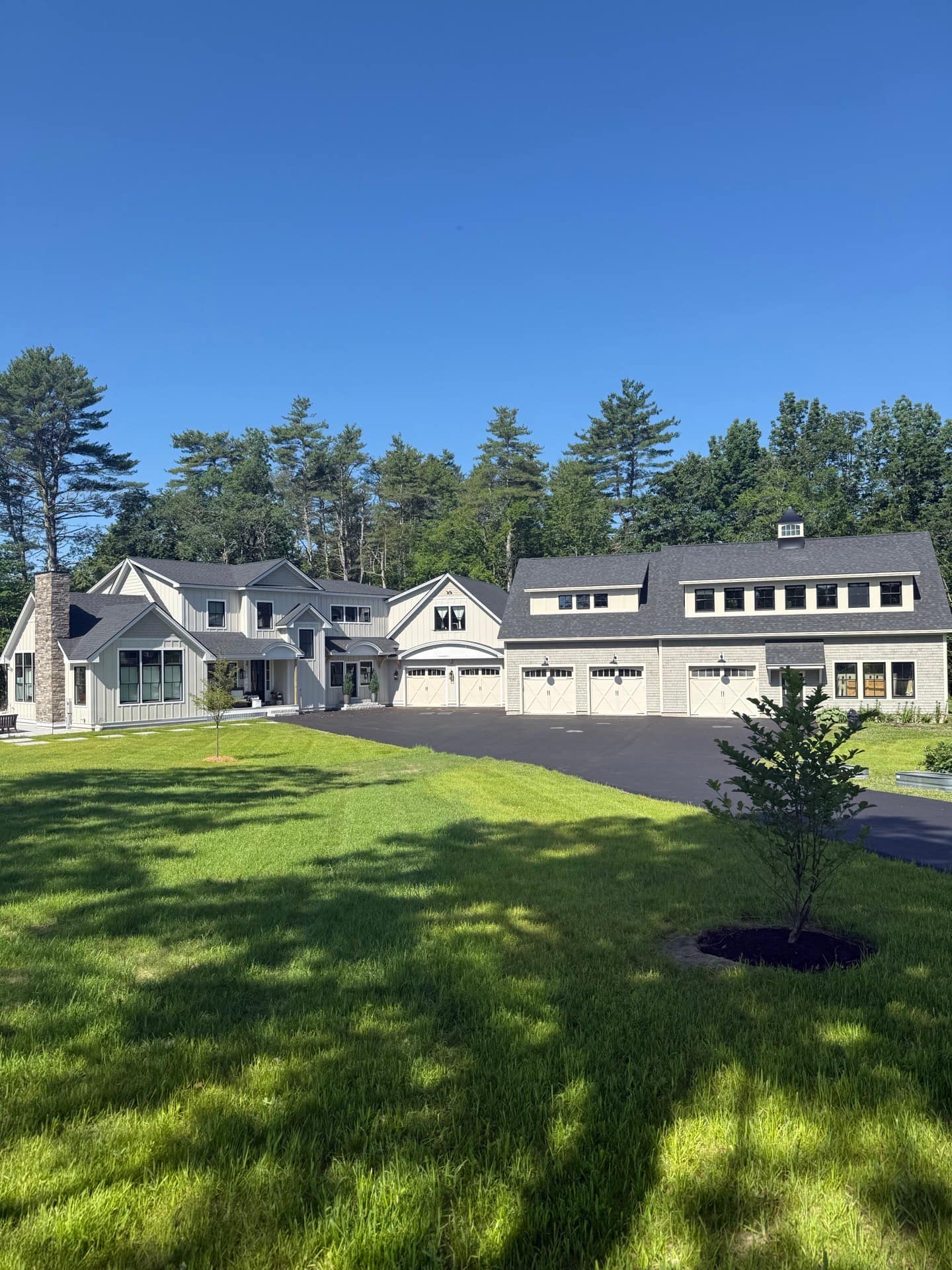
Building a custom home is one of the biggest investments you'll ever make. And while most homeowners spend months picking cabinets, tile, and paint colors, the electrical plan often gets treated as an afterthought — something the builder handles behind the scenes.
That's a mistake. The electrical decisions you make during the planning stage affect everything from where you can place furniture to how much your energy bills cost to whether your home can support an EV charger or solar panels ten years from now. At Goodnow Electric, we specialize in new construction electrical across Southern Maine, and early planning is what prevents expensive change orders later.
Start with the Panel — Size It for the Future
The electrical panel is the heart of your home's electrical system. For new construction, we always recommend a 200-amp panel at minimum, with room for expansion. Here's why:
- EV chargers — Even if you don't drive an electric car today, the next owner might. Running a 50-amp EV circuit during construction, while the walls are open, costs far less than retrofitting it through finished walls later.
- Heat pumps — Maine's building codes are increasingly pushing toward electrification. Your panel needs headroom for high-efficiency heating and cooling.
- Solar readiness — If solar panels are even a possibility, your panel needs to be inverter-compatible with space for a solar breaker. Planning for it at rough-in costs far less than rearranging a full panel later.
- Home additions — Finishing the basement or adding a garage apartment down the road is much easier when the panel has spare capacity.
An undersized panel in a brand-new house is one of the most frustrating problems we see. Getting it right from day one is simple and inexpensive.
Outlet Placement: Think About How You Actually Live
Building code specifies minimum outlet requirements, but code minimums and comfortable living are two different things. Before your electrician starts the rough-in, walk through the floor plan and think about:
- Kitchen islands — Do you want outlets in the island for blenders, stand mixers, or charging stations? Floor-fed outlets need to be planned before the slab is poured.
- Bathroom vanities — Double vanities should have outlets on both sides, not just one.
- Media walls — If you're mounting a TV, plan for a recessed outlet behind it with low-voltage cable for HDMI runs. It looks infinitely better than visible wires.
- Garages and workshops — Dedicated 20-amp circuits for power tools, air compressors, and workbench areas. Homeowners in Gorham and Windham with larger properties often want well-equipped workshop spaces.
- Outdoor living — Deck outlets, landscape lighting circuits, and weatherproof outlets near patio cooking areas. These are easy during construction and painful to add later.
Lighting Design Matters More Than You Think
Good lighting makes a home feel warm and inviting. Bad lighting makes even a beautiful house feel flat. During new construction, you have the luxury of planning lighting properly:
- Layered lighting — Combine recessed cans, pendant fixtures, under-cabinet strips, and accent lighting. Each layer should be on its own switch or dimmer.
- Smart switches everywhere — If you're wiring from scratch, run neutral wires to every switch box so smart switches work throughout the house from day one. This is the kind of detail that separates a well-planned home from one that feels incomplete.
- Exterior lighting zones — Front entry, garage, back deck, landscape, and security lights should each be independently controllable.
We work with homeowners and builders across Portland, Cape Elizabeth, Falmouth, and South Portland to develop lighting plans that match both the architecture and the way people actually use each room.
Low-Voltage and Data Wiring
This is the most commonly overlooked part of new construction electrical. While your home is open-framed, it costs almost nothing to run:
- Cat6 Ethernet to every room — Wi-Fi is great, but hardwired connections are faster and more reliable for home offices, gaming, and streaming.
- Coax to media areas for cable or antenna connections
- Pre-wire for security cameras at exterior corners and entry points
- Structured wiring panel in a utility closet to centralize your network equipment
Once the drywall is up, pulling these cables becomes expensive and disruptive. During rough-in, it's trivial.
What Current Code Adds to a New House
Maine enforces the 2026 National Electrical Code for installations that begin on or after July 1, 2026. A new home wired today includes several items that older houses never had, and it helps to know them before you see the plans:
- Outdoor emergency disconnect — one- and two-family homes need a readily accessible disconnect outside, so firefighters can shut off power without entering the building.
- Surge protection — a surge-protective device at the service equipment is now required for dwelling units.
- AFCI and GFCI protection — arc-fault protection covers most living-space circuits, and ground-fault protection covers kitchens, baths, garages, basements, outdoors and laundry areas.
- Tamper-resistant receptacles throughout the house.
- Interconnected smoke alarms, hardwired with battery backup, so that one alarm sets off all of them.
None of these are optional extras; they are built into every new-construction bid.
The Inspection Sequence
Electrical work on a new home is inspected at least twice. The rough-in inspection happens after boxes and cable are installed and before insulation and drywall, which is why it sits on the builder's critical path — a failed rough-in holds up the insulation crew. The final inspection happens after trim-out, when devices, fixtures and the panel are complete. Some jobs also need a service inspection so the utility can connect permanent power. Keeping these dates in step with the builder's schedule is a large part of what a good electrical contractor does on a new build.
Working with Your Builder
The best results happen when the electrician is involved early — ideally during the design phase, not after framing starts. At Goodnow Electric, we coordinate directly with general contractors and builders to review plans, flag potential issues, and ensure the electrical layout supports the homeowner's vision.
Whether the project is a modest starter home in Saco or Biddeford or a custom build in Scarborough, the process is the same — plan thoroughly, wire correctly, and leave room for the future.
We also handle commercial new construction for offices, retail spaces, and mixed-use buildings throughout the region.
The Goodnow Electric Difference
When you hire Goodnow Electric for your new build, the owner is on-site for every phase — rough-in, trim-out, and final inspection. You won't be handed off to a crew you've never met. That's the gold standard we've built our reputation on, and you can read what customers say in our customer reviews.
Planning a new home? Contact us early — the earlier we're involved, the better the outcome. Browse our completed projects to see our craftsmanship, or call (207) 318-1022 to talk through your project. Free estimates, no obligation.
We're proud to serve homeowners building across Westbrook, greater Southern Maine, and beyond.