Cornish treats exterior lighting as part of a building’s appearance. The town’s Historic Properties Guidelines define a building’s elevation to include its light fixtures, and in the Historic District Overlay, and for properties on the town’s list of historic buildings, a material change to that elevation requires an application reviewed by the code enforcement officer and the Planning Board. For the Victorian and Colonial houses along Main and Maple streets, that means choosing porch lights and wall lanterns that suit the building’s age and scale, and planning new fixture locations before the old ones come down. The Historical Properties Committee of Cornish is a resource the code officer and board can draw on when a change is reviewed, and hiding new wiring inside the wall keeps clapboards and trim intact.
The town’s land use ordinance also sets a general glare standard. Section 2.8.8 requires exterior lighting to be focused, shielded or hooded so it does not bother motorists, pedestrians or neighbors, and limits light spilling onto abutting residential properties to 0.5 foot-candles. In a village of close-set houses, that favors downward-aimed, full-cutoff fixtures, motion sensors instead of all-night floodlights, and warm-color LED lamps. Out on the hills and along the river, driveway posts, barn lights and path lights to the water follow the same idea, with wet-location fixtures and GFCI protection near the river. Photocells and timers keep outdoor lights on only when they are useful.
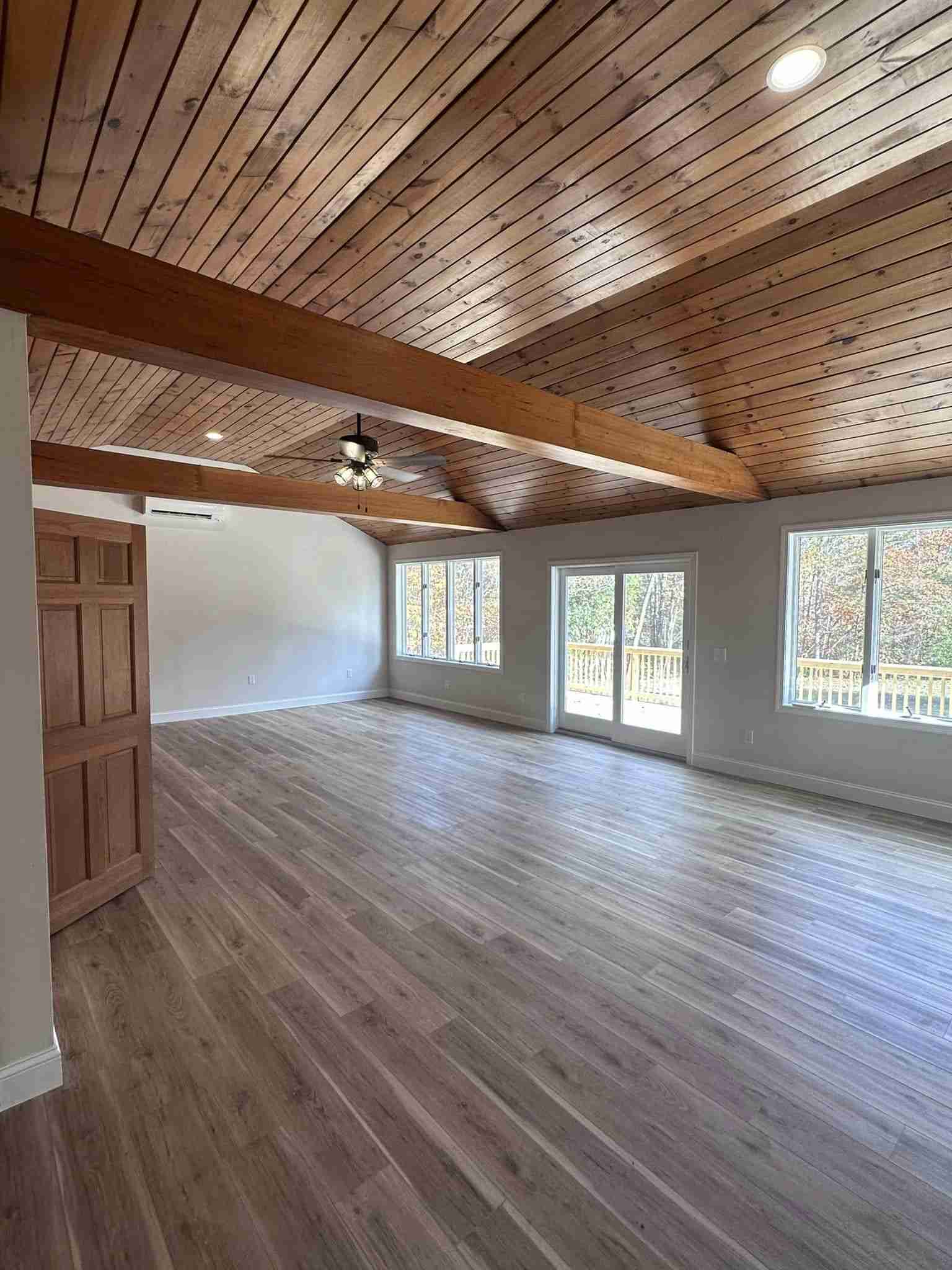
Inside, older Cornish houses often have too few fixtures and switches in the wrong places, and newer ones have the single-ceiling-light rooms of their decade. Recessed LEDs where ceilings allow, under-cabinet kitchen lighting, ceiling fans with separate controls and dimmers compatible with LED lamps all modernize a room, and LED retrofits trim load on an older service. Goodnow Electric installs recessed and LED retrofit lighting, under-cabinet, outdoor, landscape and security lighting, fans, dimmers and controls. New circuits are permitted through the state electrical board and inspected, and the owner is on site with a free written estimate first.