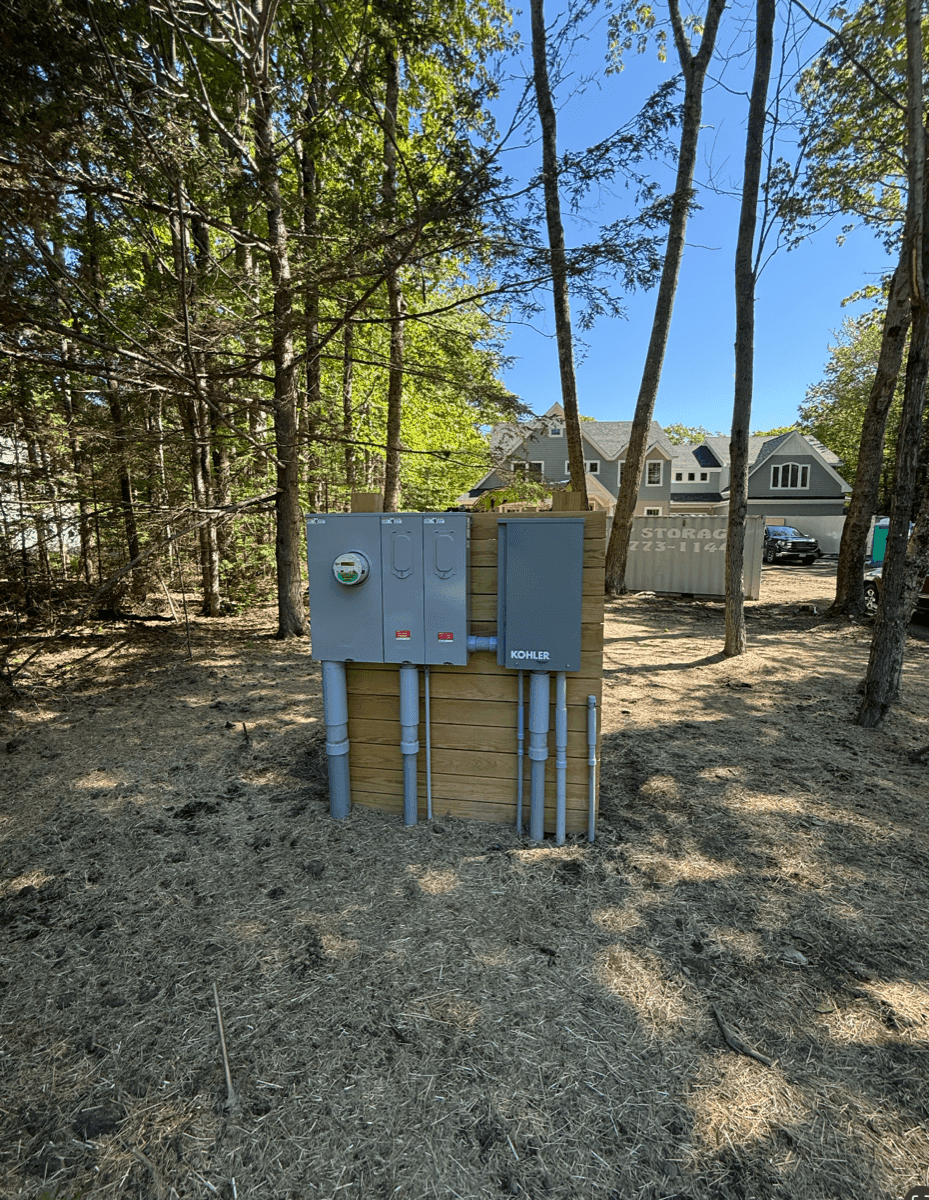
More than a third of Dayton's homes were built in the 1980s and 1990s, and many may still have the 100- or 150-amp panel they were built with. Those panels were sized for an oil or propane furnace, a range, a dryer and ordinary household loads. They were not sized for the loads arriving now: heat pumps replacing oil in the roughly 64 percent of homes that still burn it, a Level 2 EV charger, a hot tub, or a generator transfer switch. When a panel has no open spaces left, or when tandem breakers and add-on subpanels have been used to squeeze in more circuits, it is usually time for a load calculation and a 200-amp service.
Older houses are fewer here than in many York County towns, but the ones that survived the 1947 fires, about 14 percent of the stock predating 1940, can still carry fuse boxes, early wiring and services that were enlarged one piece at a time. Federal Pacific, Zinsco and Challenger panels, whatever the house's age, are worth replacing. Warning signs include breakers that trip under normal use, a warm panel cover, a burning smell, and lights that sag every time the well pump kicks on. Whole-home surge protection belongs in any upgrade, because heat pumps and modern appliances are full of sensitive electronics.
Deciding where the new meter and panel go now involves one more piece of equipment. For one- and two-family homes, Maine requires an emergency disconnect outdoors whenever a service is new or fully upgraded, set on the building or on a pedestal within sight of it and within 50 feet. In places where the state oversees electrical work, a building with two or more meters also needs a state electrical permit. Goodnow Electric pulls that permit and arranges the utility's disconnect and reconnect. You get a free written estimate before anything starts, itemizing the service size, panel, surge protection and disconnect so it can be compared line by line with any other bid.