Few towns in Cumberland County have a clearer outage record. On December 18, 2023, a storm with winds up to 65 miles per hour left all but about 100 of Harpswell's roughly 4,750 CMP customers without power, and trees and lines closed part of Harpswell Neck Road. After the March 2024 ice storm, all 4,760 customers were out, and two days later about 2,400 still were. In December 2025 another windstorm took out roughly 63 percent of the town. With one road out along each neck and island chain, crews reach the far ends last.
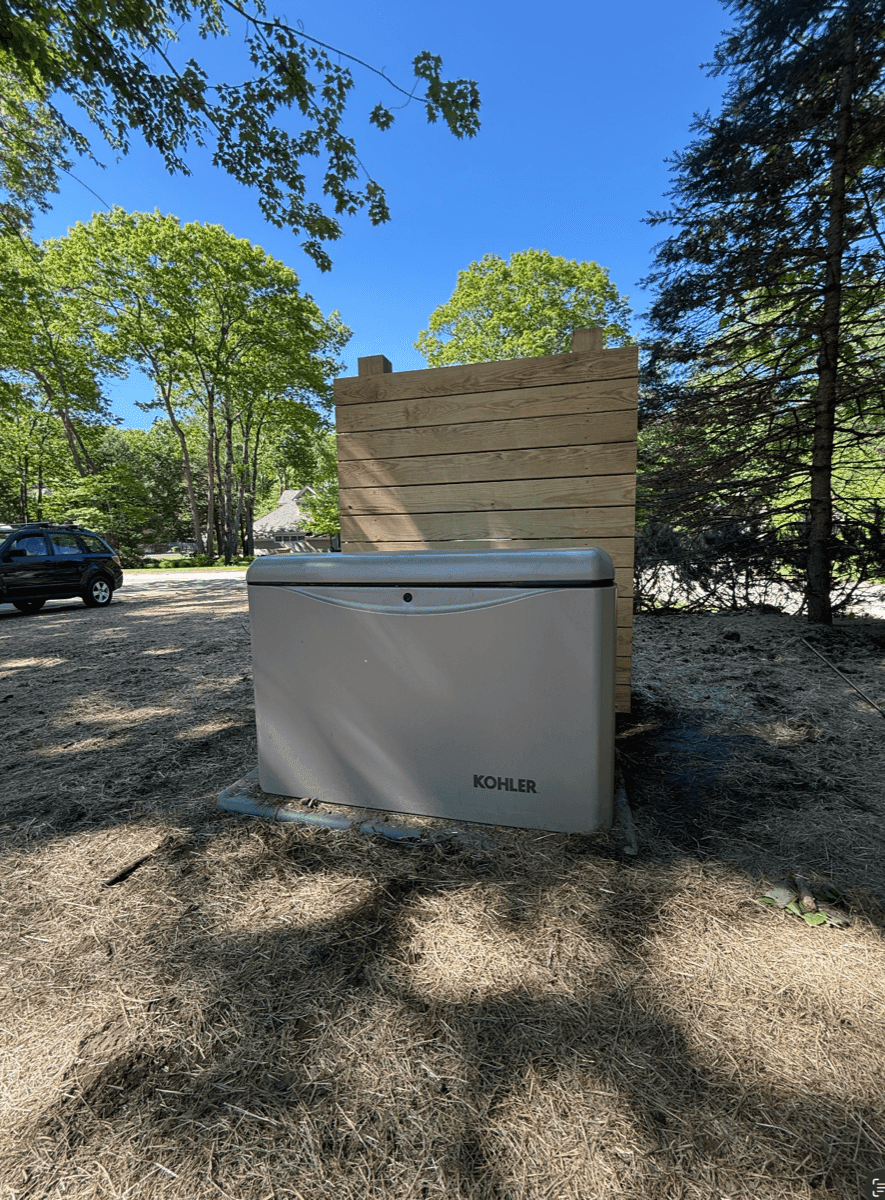
For a house on a private well, an outage means no running water as well as no heat once the boiler or heat pump stops. A whole-home standby generator with an automatic transfer switch keeps the well pump, heating system, refrigerator and sump pump running without anyone going outside in the storm. With propane already heating about a third of the town's homes and utility gas essentially unavailable, most standby units here run on propane. Sizing starts with a list of what must stay on, since a heat pump system draws far more than an oil burner's controls, and a well pump's starting surge has to fit within the generator's capacity.
Harpswell's own permit guide lists generators among the projects that need a town building permit, and the electrical work is permitted through the state board. On shorefront lots, the pad has to stay outside the 75-foot shoreland setback from the highest astronomical tide, and properties within the flood maps adopted in June 2024 need the town's flood hazard review as well. A portable generator with an interlock kit and outdoor inlet is a lower-cost alternative that still keeps power off the utility line. Either way, follow the town's warning: never run a generator indoors, in a garage or within 10 feet of the house. For seasonal homes, a standby unit that exercises itself weekly and keeps the heat on during a January outage can also prevent frozen pipes in a house nobody is watching.