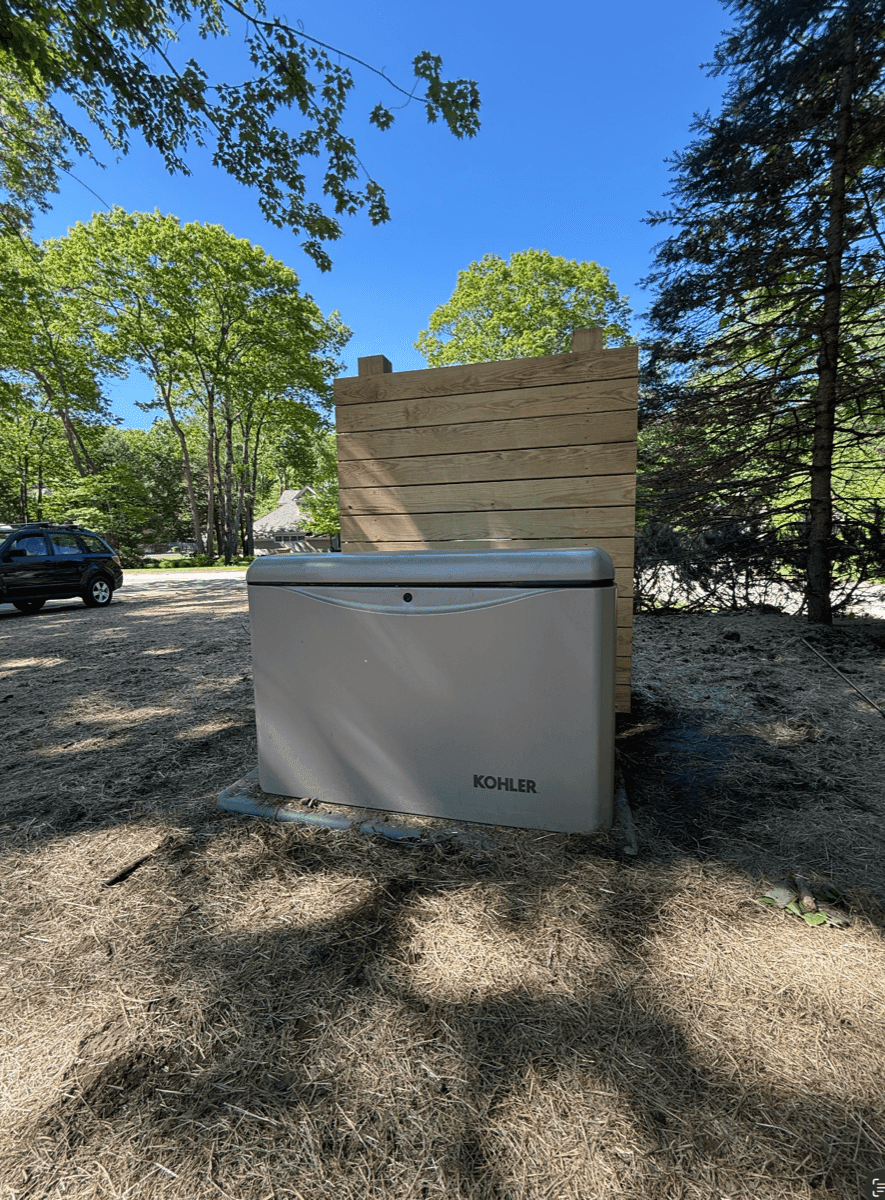
About 65 percent of Hollis homes heat with oil, and an oil boiler or furnace is useless in an outage: its burner, controls and circulator all need electricity. The private well goes quiet too, and in a spring thaw so does the sump pump, so a long outage quickly becomes a household problem, felt first by families who work from home or depend on powered medical equipment. Maine has had long ones. More than 400,000 outages followed the October 2017 nor'easter, the state's largest weather-related outage on record, and some homes waited over a week; in December 2023 another nor'easter left about 300,000 outages behind. Lines threaded through the woods along rural roads are the ones trees bring down.
Piped gas serves only about 1 percent of Hollis homes, so a standby generator here almost always burns propane. About 15 percent of homes already heat with it, so many have a tank and a supplier in place. The size of the unit follows the list of loads a family cannot do without: for some that is just the boiler, the well, the refrigerator and a handful of circuits, and for others it is every circuit in the house. A standby unit gets an automatic transfer switch; a portable one gets an outdoor inlet and a panel interlock. A state clarification says a transfer switch installed by itself does not trigger the new outdoor emergency disconnect, which comes into play only when the service is upgraded at the same time.
Placement depends on the lot. On land near the Saco, Hollis handles shoreland zone tree removal permits, so anyone cutting trees by the river for a pad or a fuel line should talk to the code office first. Exhaust has to discharge well away from windows, doors and vents, the pad should sit firm above any standing water, and a spot where roof snow and plowed banks will not bury it. The electrical work falls under the state permit framework rather than a town electrical inspector, and the propane connection is a separate licensed trade. A generator that exercises itself weekly is ready when the next storm comes, and for a household that travels in winter, an automatic unit keeps the heat on in an empty house.