In a town where about 74 percent of homes heat with oil, an outage is a heating emergency as much as a lighting one. An oil boiler or furnace cannot run without electricity for its burner, controls and circulator pump, so the heat stops when the power does. A private well pump stops, and so does a sump pump in a wet basement. Maine storms have shown how long that can go on; outages after the October 2017 nor'easter topped 400,000, with some homes dark for more than a week, and the December 2023 storm brought roughly 300,000. On the long rural roads between villages, trees across the lines are the usual cause.
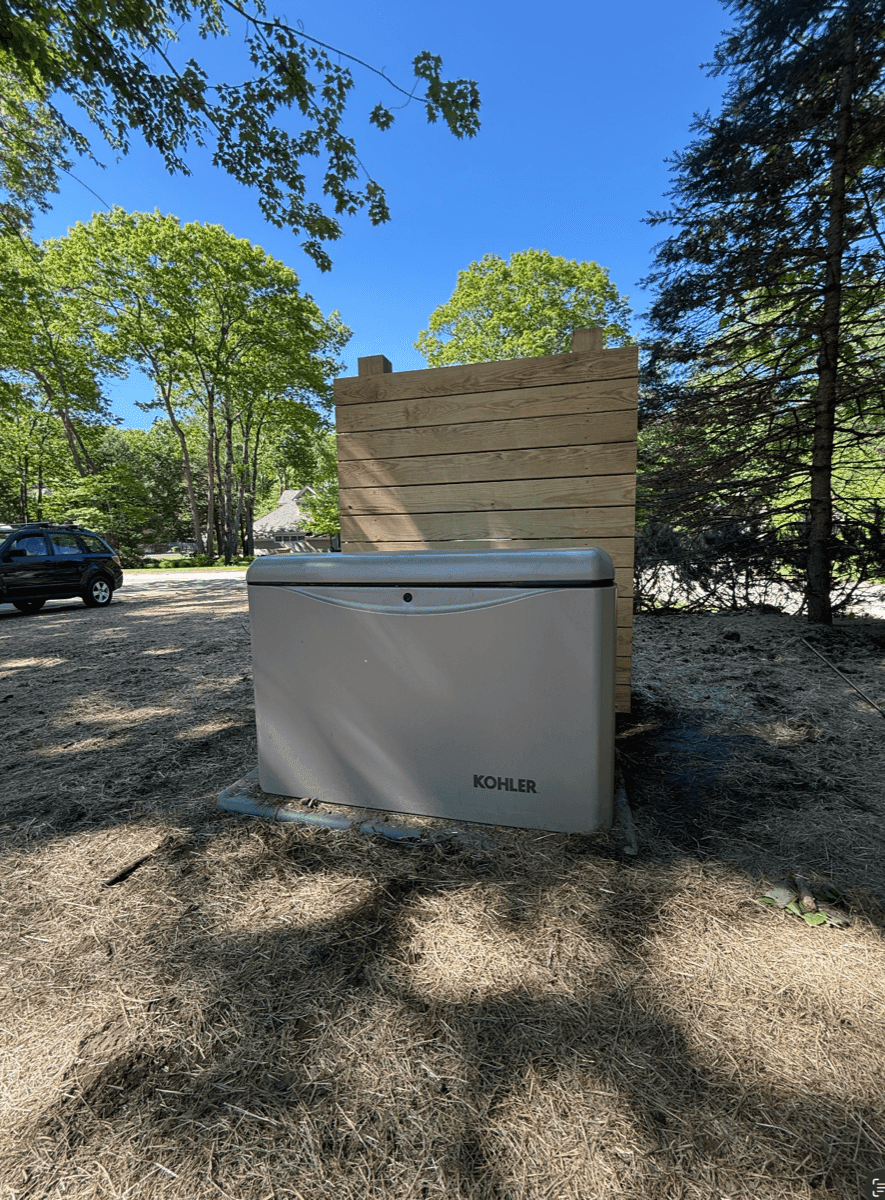
Buxton has no piped gas service reported in the Census data, so a standby generator here runs on propane from an on-site tank; about 8.5 percent of homes already heat with propane and have one in place. Sizing starts from a list of what must keep working, which may be only the heating plant, the well, the fridge and a couple of lighting circuits, or may be everything; a standby unit then gets an automatic transfer switch. A home that burns wood for part of its heat can often get by with a smaller unit that covers the well, the refrigerator and the boiler controls. Owners who would rather keep a portable can have an outdoor inlet and a panel interlock fitted, which feeds the circuits they pick and never pushes power back onto the utility line the way an improvised cord can.
Placement matters on river lots. The town ordinance includes a floodplain management article, so a pad near the Saco or Little River should be checked against the flood map before it is poured, and the unit set high enough to stay dry. Exhaust must point away from any window, door or vent, and the pad belongs out of the path of snow and ice coming off the roof. Generators are a listed fee item on Buxton's electrical application, beside motors, and the town's own inspector signs the installation off. The propane piping is a separate trade, coordinated so the unit is ready to run on inspection day.