When the power goes out in North Yarmouth, the water usually goes with it. The Yarmouth Water District reaches only some customers in town, so many homes depend on a private well with an electric pump, and every oil boiler needs electricity for its burner and circulators. Lose power for a day in January and a house can be without water, heat and a working sump pump at once. Trees falling on long overhead lines are the usual cause, and the December 18, 2023 windstorm showed how widespread that can get, with gusts arriving in waves from morning to night. The 2017 windstorm and the 1998 ice storm both left parts of Maine dark for more than a week.
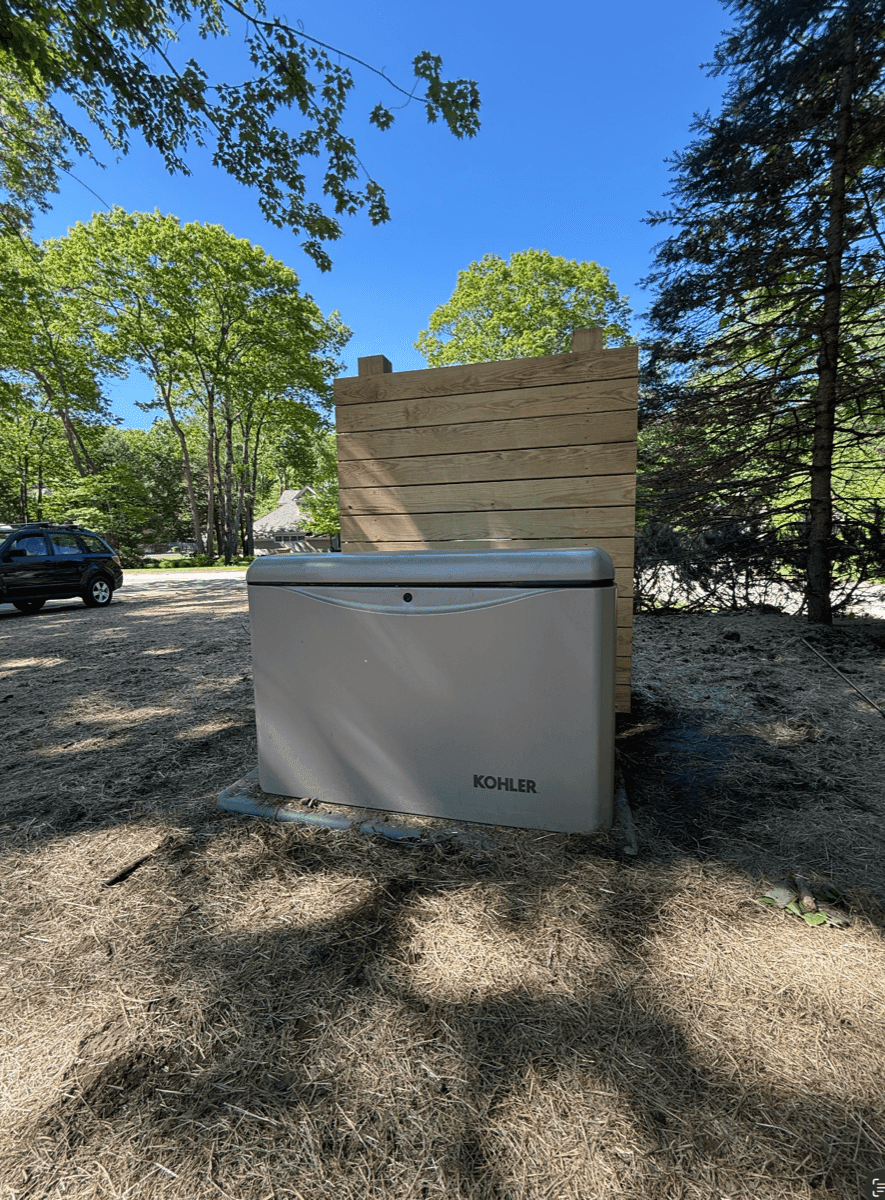
Seconds after the grid drops, a permanently installed standby unit behind an automatic transfer switch is running and carrying the well pump, boiler, refrigerator and chosen circuits without anyone stepping outside. Utility gas heats fewer than 5 percent of North Yarmouth homes, so a standby unit here normally draws from a propane tank big enough to run it for several days. A household choosing a portable machine instead can feed the panel safely through a rated inlet and a breaker interlock, with no backfeeding through a dryer outlet and no risk to line crews working down the road.
Goodnow Electric works out generator size from the circuits a North Yarmouth household truly relies on, paying particular attention to the starting surge of a well pump, which is larger than its running load and is what undersized units fail on. The unit needs a level pad, exhaust clearance from windows and doors, and a sensible route for the propane line. The town's code enforcement officer inspects the transfer switch and generator wiring under a local electrical permit before anyone counts on the system. Standby units start themselves once a week for a short test run and, like any engine, want servicing every year; one that has sat unmaintained through a dry summer is the one that fails to start in the first ice storm.