Gray's power reaches most homes along roadside lines through wooded country, and trees are what bring them down. When the October 2017 windstorm knocked out over 400,000 Maine accounts, a weather record for the state, and the March 2024 ice storm took about 200,000 CMP customers offline, the lake lanes and back roads near Little Sebago, Crystal and Forest Lake were among the places left waiting longer for restoration than those near the village and the main routes.
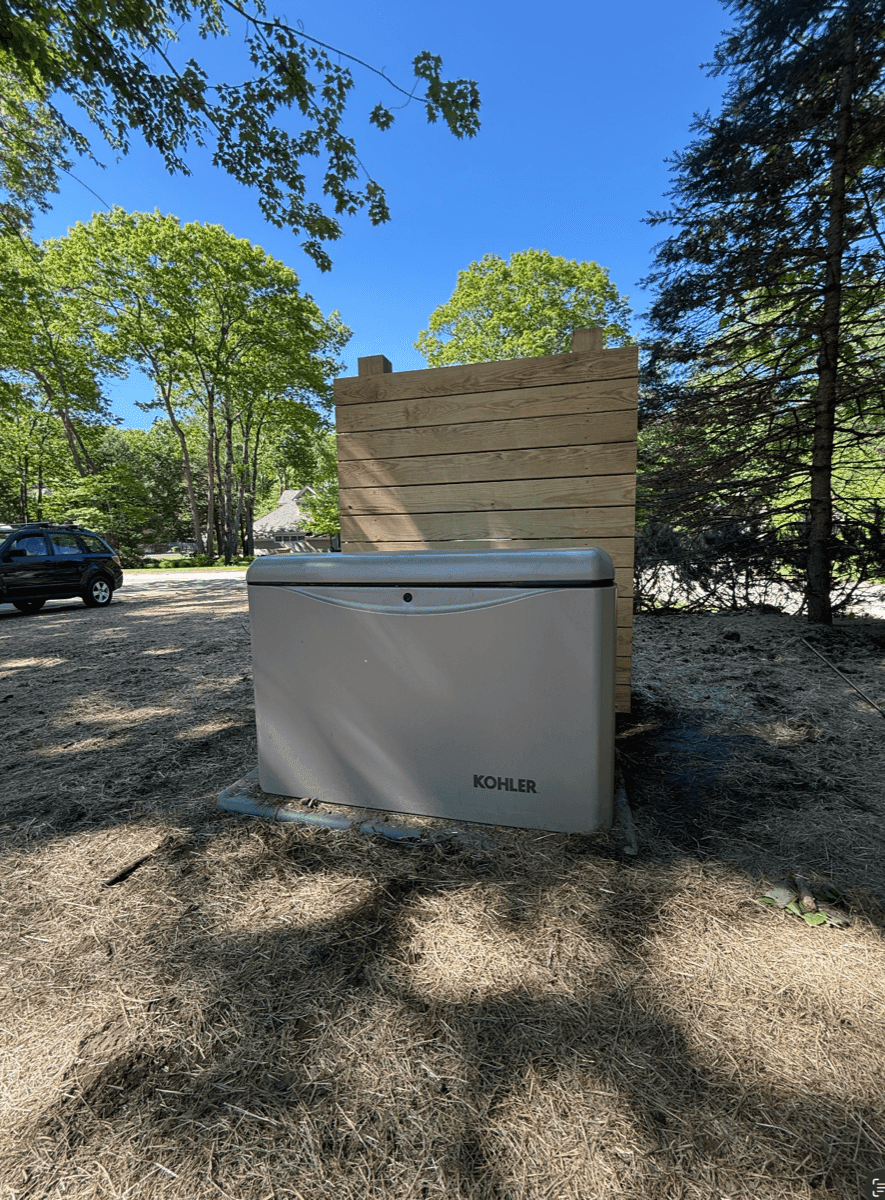
For many Gray households, losing power means losing water. Homes on private wells depend on an electric pump, and many basements rely on a sump pump during spring melt and heavy rain. Wired through an automatic transfer switch, a permanent standby unit takes over by itself and keeps the pump, heat, refrigerator and sump running. Gas mains reach roughly 1 percent of Gray, so the fuel is propane, already in the yard at about a quarter of homes for heat. Sizing depends on whether the house heats with oil, which needs only controls and a circulator, or with heat pumps, which need far more. A load list that includes the well pump's starting surge, the freezer and any medical equipment keeps the generator from being too small on the one night it matters, or larger and costlier than the house needs.
Placement follows clearance rules around windows, doors and vents, and on lakefront lots the town's shoreland zoning governs how close equipment can sit to the water. The budget route is a portable unit feeding an outside inlet, with a panel interlock that makes it impossible to energize CMP's line while it runs selected circuits. Goodnow Electric works out the load for either approach, does the install and files the Gray electrical permit, which the town's Code Enforcement Office then inspects before the system is put into service. Whatever the setup, run portable generators outdoors and away from doors and windows, since carbon monoxide in an attached garage is a real danger during long outages.