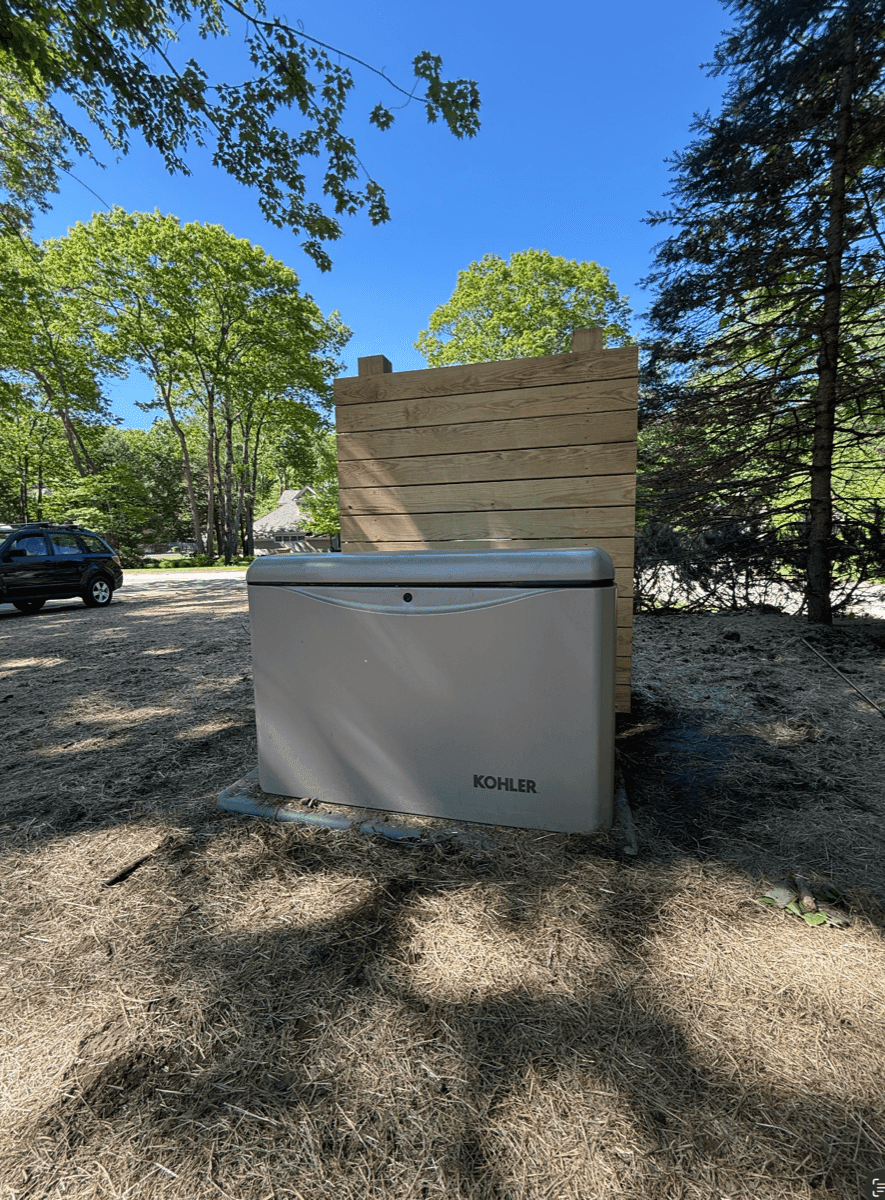
Sanford's streets are lined with mature trees, and the roads toward Alfred, Shapleigh and North Berwick run through woods, so wind storms put limbs on lines here as they do across York County. When the October 2017 storm hit, over 400,000 Maine customers went dark, and some stayed that way more than a week; in December 2023 another storm brought roughly 300,000 outages statewide. The Sanford Water District serves Sanford and Springvale, which spares many owners the worry of a dead well pump, but an oil-fired boiler cannot run its burner or pump water through the radiators without power, and a basement sump pump near the Mousam stops with everything else. In January, a long outage also means frozen pipes if the heat cannot run, which is often the loss owners fear most.
A permanently installed standby unit detects the outage, starts, and moves the house onto its own power through an automatic transfer switch in a few seconds. Fuel choice follows what is at the street: about 4 percent of Sanford homes heat with utility gas and about 13 percent with propane, so some houses can tie a generator to an existing gas line while others need a propane tank that holds enough for several days. Load sizing comes first. A unit that covers the boiler, the kitchen circuits and a heat pump is sized differently from one meant to carry the whole house, including an EV charger. Listing what must keep running, and for how long, is the first conversation before any equipment is chosen.
Placement takes more thought on the city's smaller lots, where the unit must sit clear of windows, doors and air intakes and keep manufacturer clearances from the house and property line. A portable generator you already own can be put to work through an outside inlet and a panel interlock, which lets it run the circuits you pick while making it impossible to push power back onto CMP's wires. Sanford's permit form lists generators and transfer switches as their own item, and Goodnow Electric handles that permit and the city inspection. A portable belongs in the open air every time it runs, never in a garage or basement, where carbon monoxide collects fast. Service work on the generator installation is coordinated with CMP where the meter must be pulled.