About a third of Sanford's homes were built before 1960, and the houses near the old Goodall mills and on Springvale's side streets were wired for lights and a handful of outlets. Plenty are still fed by 60- or 100-amp services, and some keep screw-in fuses. That equipment was never meant to carry an electric range, a dryer, a heat pump and an EV charger at the same time. Warning signs include fuses that blow when the microwave and toaster run together, breakers that trip on the coldest mornings, a panel cover that feels warm, or lights that dim whenever a large appliance starts. If your panel carries a Federal Pacific, Zinsco or Challenger label, replacing it is worth pricing whether or not you plan to add anything.
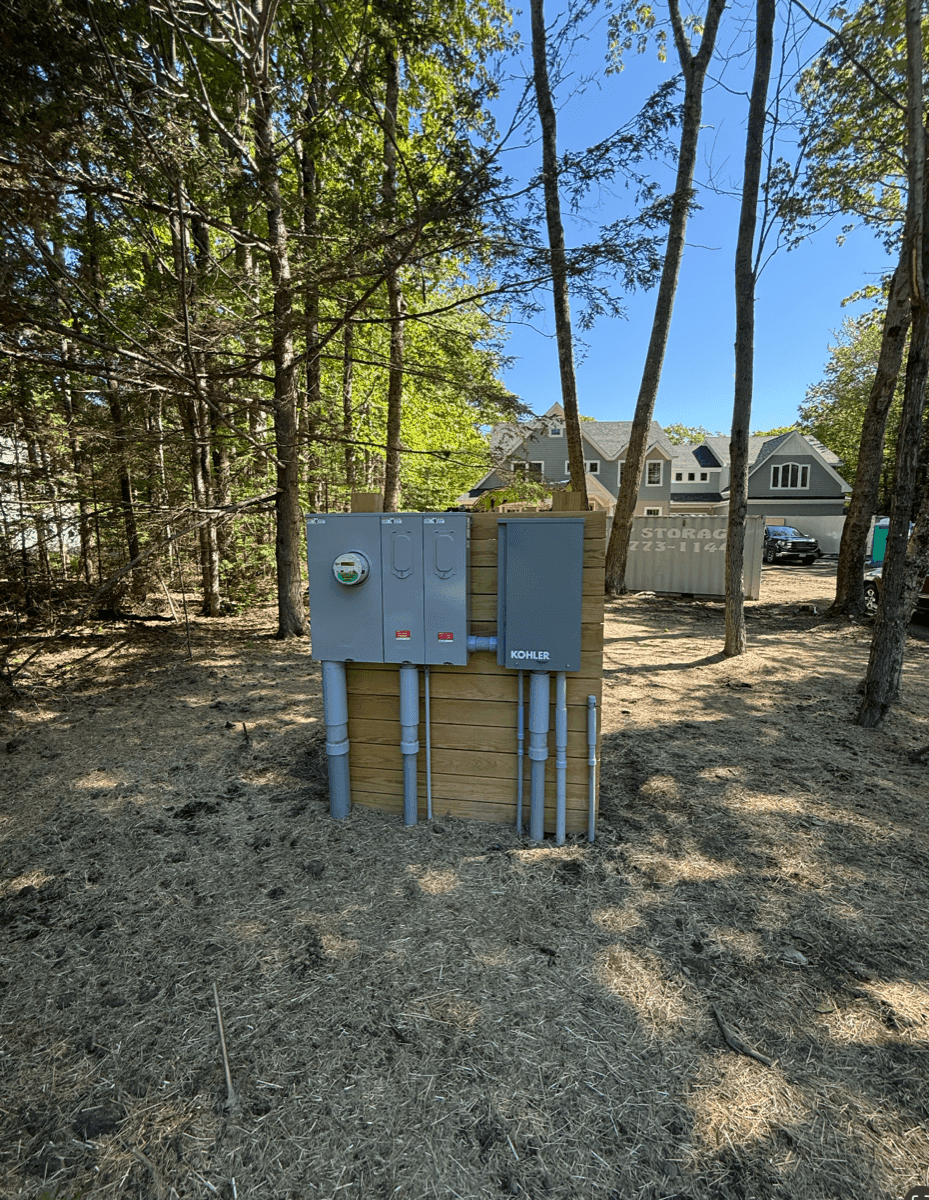
Load is rising for a plain reason: about 63 percent of Sanford homes burn oil for heat, and when one switches to heat pumps, that heating demand moves onto the electric service. The city's permit form lists mini-splits and EV chargers as separate items for the same reason. A 200-amp service gives room for both, plus whole-home surge protection to guard the electronics inside new heating equipment. The layout also has to leave space for an outdoor emergency disconnect, which Maine now requires whenever a one- or two-family home gets a new or fully upgraded service; it goes on the building or on a pedestal in sight of it, no more than 50 feet away.
In Sanford's two- to four-family buildings, about 17 percent of the housing, an upgrade often means a new meter bank, a panel for each unit and a separate house panel for hallway lights and the boiler. Mobile homes, about 5 percent of the stock, need a service built to their own rules. In every case Goodnow Electric pulls the city electrical permit, gets the CMP work order number the form asks for, coordinates the utility disconnect and reconnect, and meets Sanford's electrical inspector for sign-off. Estimates are free and written, and the panel is sized for the loads you expect over the next several years, not only the ones you have today.