Wells gets outages from two directions. Along the shore, winter storms push water over the beach roads and damage dunes, and the January 2024 storms damaged Wells Beach badly enough that a FEMA-funded project is rebuilding it with sand dredged from the harbor. Inland, the town stretches across wooded country toward Sanford and North Berwick, where trees and wet snow bring lines down; on April 4, 2024, heavy, sticky snow and wind caused widespread outages across southwest Maine. In either setting, an outage in January means no heat, and for the many seasonal homes that sit empty through the winter, it can mean frozen pipes before anyone knows the power is off.
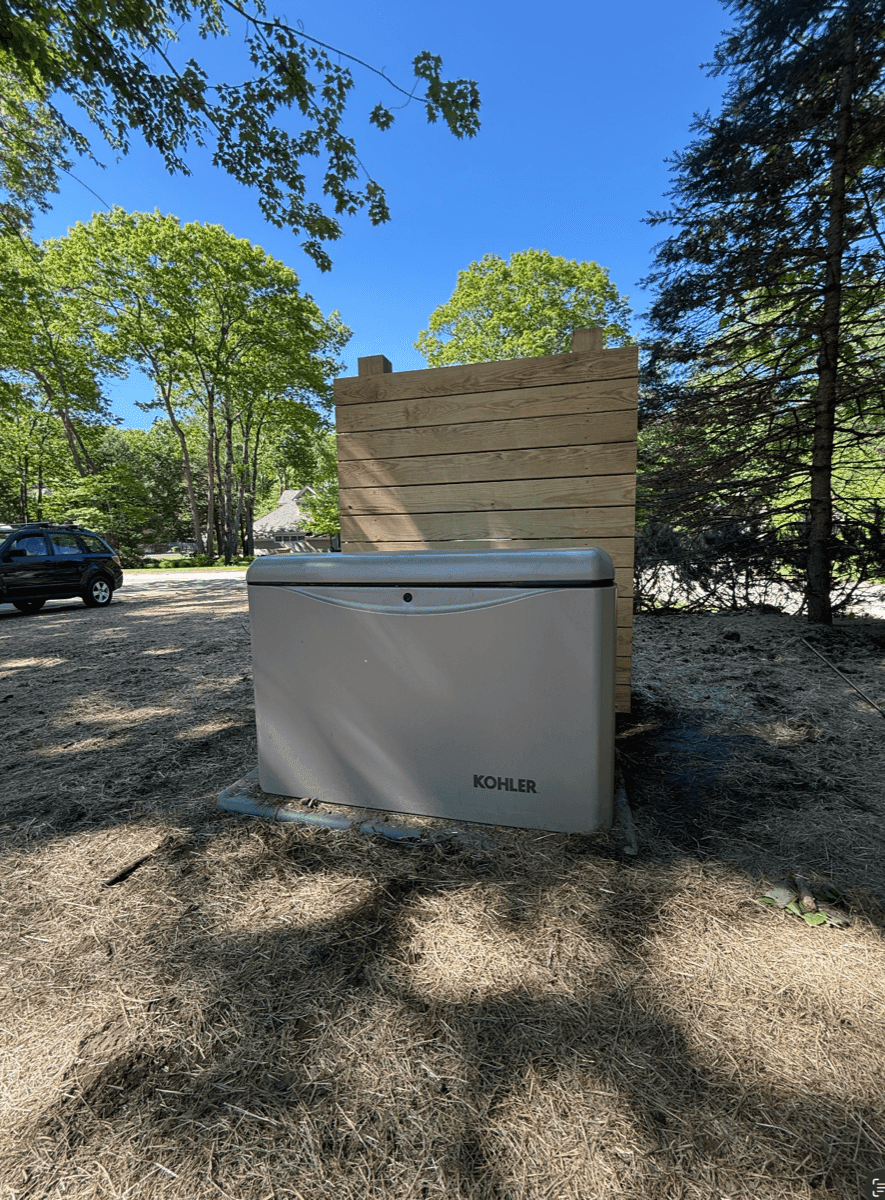
A standby generator with an automatic transfer switch starts on its own and keeps heat, refrigeration, a sump pump and a well pump running. Since utility gas reaches only about 1 percent of Wells homes, most standby units here run on propane, which already heats about 22 percent of houses. Homeowners with a portable generator can install an interlock kit or manual transfer switch with an outdoor inlet, which lets them run chosen circuits without the danger of back-feeding the utility line. For a vacant seasonal home, pairing the generator with a remote alert helps confirm the house stayed warm. Sizing comes down to the essential loads, and a well pump's starting surge is one of the biggest; homes on the Kennebunk, Kennebunkport and Wells Water District's mains skip that load, while houses on private wells need a generator that can handle it alongside the heating system.
Placement near the water needs care. Wells Code Enforcement administers shoreland zoning and the floodplain management ordinance, and a generator pad in a flood zone should be raised above the base flood elevation shown on the town's FEMA maps. On mobile home lots, the unit and transfer switch are usually tied into the pedestal or pole service. Goodnow Electric calculates the load, sizes the generator, installs the transfer switch and handles the state electrical paperwork. A standby unit also needs clearance from windows, doors and vents, and a short, protected propane run from the tank.