Most of Shapleigh's houses are younger than the town itself. The Great Fires of 1947 destroyed nearly everything, and today only about 10 percent of homes predate 1940, while the median year built is 1980. That gives the town three broad wiring types. Postwar houses from the late 1940s through the 1970s may have ungrounded two-prong outlets, early plastic-sheathed cable and, in some cases, aluminum branch circuits. Houses from the 1980s onward have grounded wiring but often lack the ground fault and arc fault protection current code calls for. Camps are the wild card, often extended one circuit at a time by successive owners. Knob-and-tube wiring is less common here than in towns whose old houses survived, but it can still turn up in the few buildings that predate the fire.
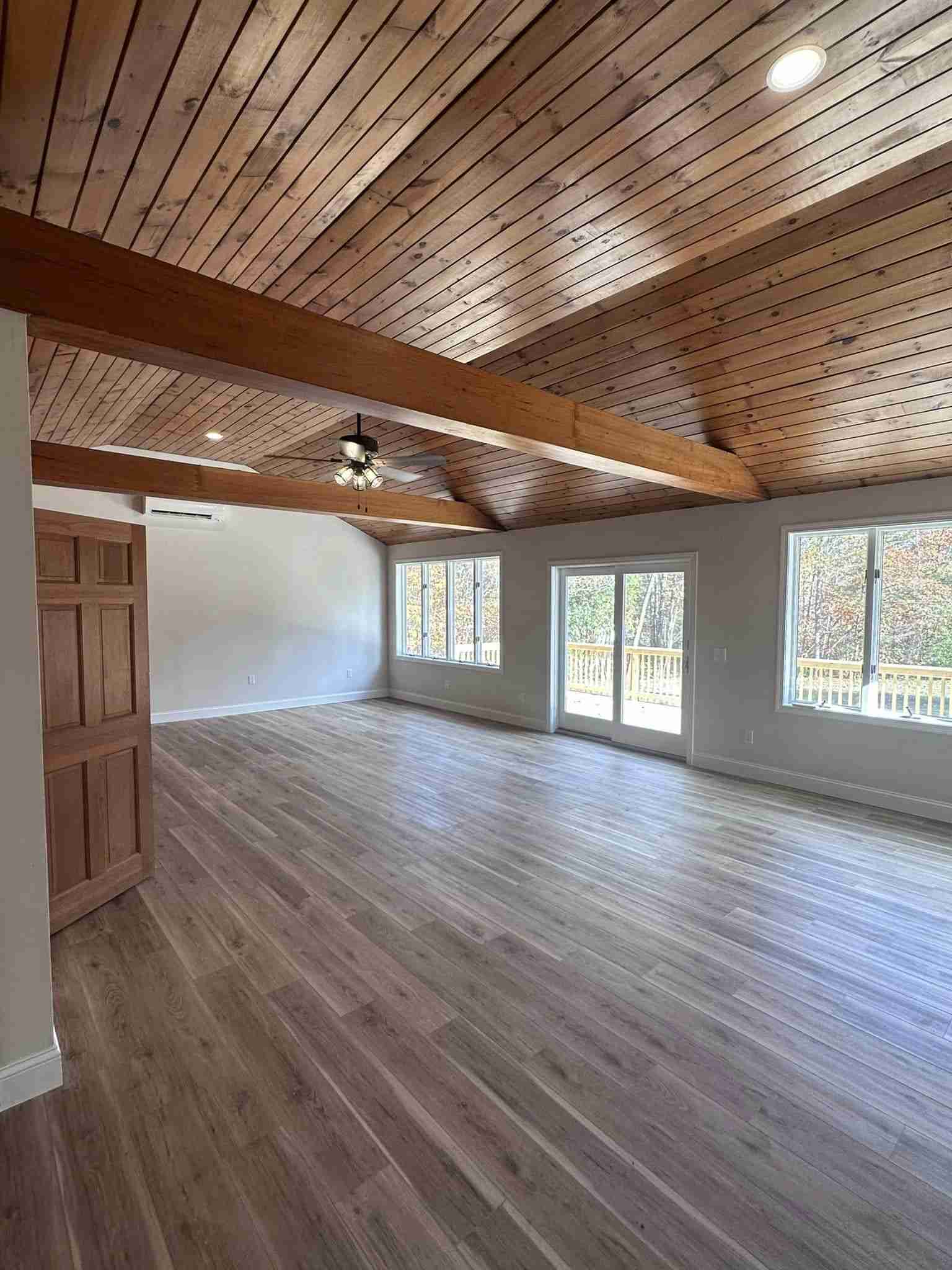
Renovations are the natural time to sort this out. A kitchen remodel, a bathroom with a new fan and heated floor, or a porch enclosed for year-round use each needs dedicated circuits, GFCI protection near water and properly sized wire back to the panel. Enclosing a screened porch, adding a bunk room over a garage or finishing a basement all need circuits planned for the new space, not borrowed from the nearest outlet. Goodnow Electric handles rewiring of old and aluminum circuits, new outlets and switches, GFCI and AFCI protection, troubleshooting of intermittent faults, and the wiring for additions. The owner is on site for every job, and estimates are written and free of charge.
Shapleigh's code office publishes clear rules on who permits what. A single-family house wired by a Maine master electrician does not need a state electrical permit; a homeowner doing their own wiring in a house they own and occupy needs a single-family certification from the state. Any building with more than one dwelling unit, including a house with an accessory dwelling unit, requires a state permit pulled by the electrician and a state electrical inspection, with results forwarded to the town. For anyone planning an in-law apartment, that distinction shapes the paperwork from the first day. Work begun on or after July 1, 2026 follows the 2026 National Electrical Code.