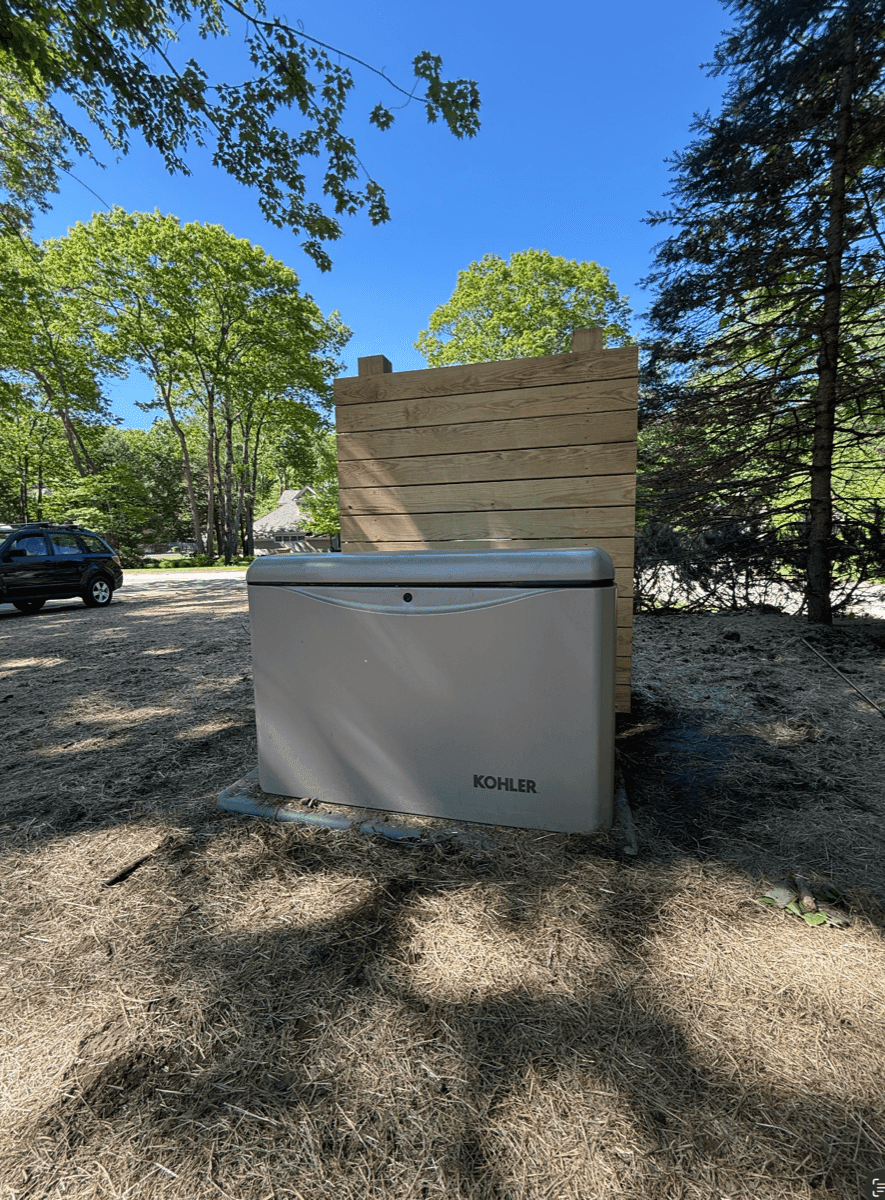
Central Maine Power serves all of Falmouth, and the town's tree cover is part of why outages here can last. When the October 2017 nor'easter came through, Maine tallied over 400,000 outages, a share of them running past a week, while downed trees kept some coastal roads shut for days; the December 2023 storm put about 300,000 more customers in the dark. In a town where wooded subdivisions and long private drives run back from Route 88, Middle Road and Falmouth Road, a single downed limb on a distribution line can leave a neighborhood dark while crews work through bigger repairs first.
What a generator needs to carry depends on how the house runs. Homes that still heat with oil need power for the burner, circulators and controls; propane and gas furnaces need their blowers; and a heat-pump house needs a generator large enough to start the outdoor units. Houses on private wells lose water the moment the pump stops, and finished basements depend on sump pumps during the same rains that bring the lines down. Falmouth's mix of fuels helps: with propane in roughly 21 percent of homes and a gas line to about 19 percent, a lot of houses can run a standby unit without adding a new fuel supply.
A permanently installed generator on an automatic transfer switch notices the outage and carries the house a few seconds later, even when the family is away. The cheaper route is a portable unit feeding a code-compliant inlet, with an interlock that keeps selected circuits alive while making backfeed onto the street impossible. Placement matters on the Foreside and along the Presumpscot. Falmouth's shoreland zone covers land within 250 feet of saltwater, the river and great ponds, and the town administers a floodplain management ordinance, so pad location, clearance and any site work get checked with the code office first. The load calculation, Falmouth's electrical permit and the town inspection are all part of Goodnow Electric's job. Owners of homes along the water should also ask about exhaust and sound: a unit tucked beside a bedroom window or a neighbor's deck is a problem an early site walk avoids, and the manufacturer's clearance rules decide where it can legally sit.