Windham covers about 50 square miles, with Sebago Lake on one side and the Presumpscot and Pleasant rivers draining the rest, and much of that land is wooded. Central Maine Power's lines follow roads through stands of pine and hardwood, and wind or ice brings them down. The October 2017 nor'easter set the record for weather-related outages in Maine, with more than 400,000, some lasting over a week, and the December 2023 storm added roughly 300,000 more across the state. Houses at the end of long camp roads and private lanes can wait longer after that kind of event, because restoration generally works from the main lines outward.
Heat is the first concern in a winter outage. About 58 percent of Windham homes heat with oil and about 21 percent with propane, and both boilers and furnaces need electricity to run. Many rural and lakeside properties depend on private wells, which stop pumping when the power fails, and basements in low areas rely on sump pumps during heavy rain. For a family that has turned a seasonal camp into a year-round home, a multi-day outage can mean frozen pipes in a building that was never designed to sit cold. A generator sized for heat, water and refrigeration covers the basics; a larger unit can carry the whole house.
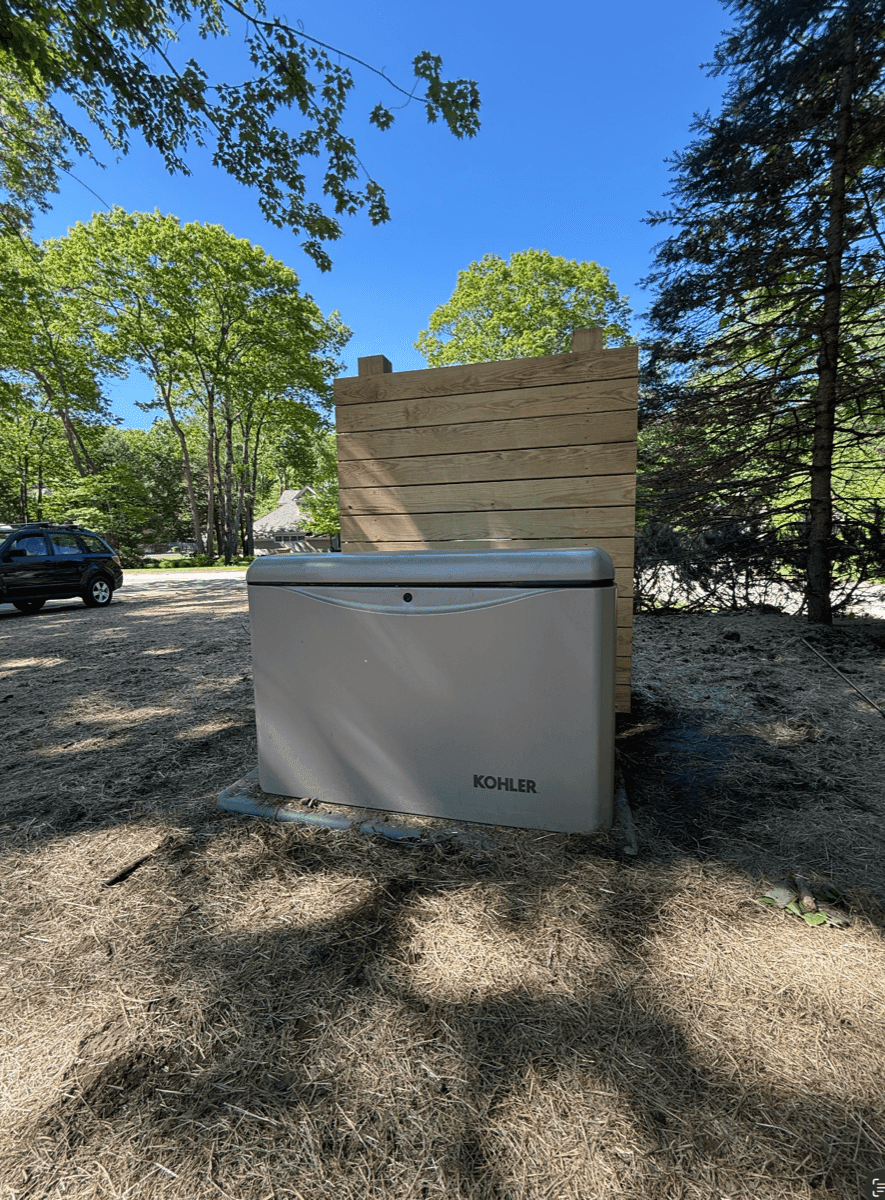
Propane is already common in Windham, which makes a whole-home standby generator with an automatic transfer switch a practical option for many households, often on an existing or expanded tank. A portable generator with an inlet box and interlock kit is the budget alternative and still keeps the utility line safe from backfeed. On lakefront lots, placement needs extra thought. Maine's shoreland zoning covers land within 250 feet of a great pond or river, and Windham administers those rules locally, so pad location, clearing and any trenching near the water get checked with the town first. Goodnow Electric sizes the load, pulls the electrical permit through Windham's portal and handles the town inspection.