For many Ogunquit owners, the worst outage is the one they do not know about. About 64 percent of the town's housing is seasonal, and a house that loses power in a January storm while its owners are away can lose heat, flood a basement when the sump pump stops, and freeze its pipes within days. The storms of January 2024 showed how hard this coast can be hit, with record tides and heavy damage to dunes and beaches across York County. Inland, trees along the roads toward York and South Berwick bring down lines in wind and wet snow.
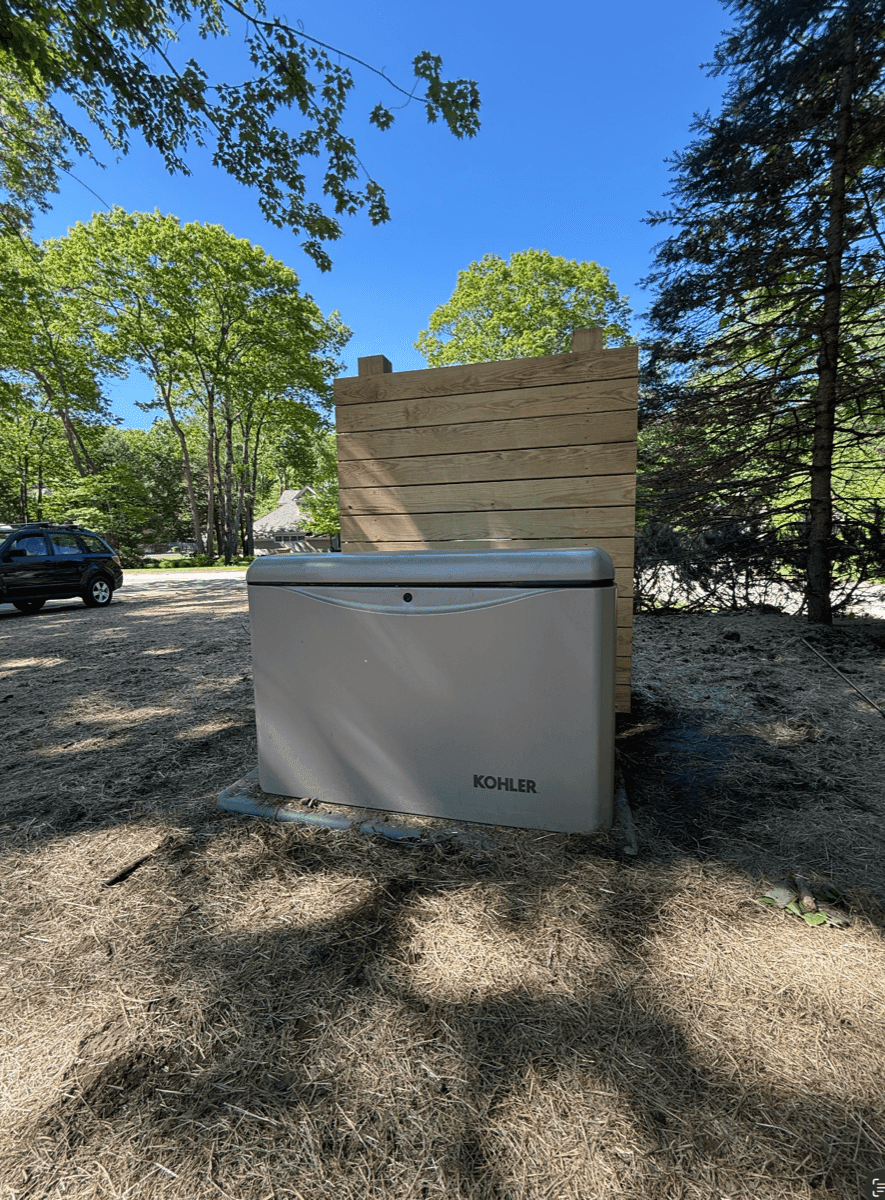
A whole-home standby generator with an automatic transfer switch is the most reliable protection for a house that sits empty. It starts on its own, carries the heating system, sump pump, refrigerator and a freeze alarm or monitoring system, and switches back when Central Maine Power restores service. Propane is the usual fuel here, since utility gas reaches only about 1 percent of homes, and the tank has to be sized to run through a long outage without a refill. Owners who are on site during storms may choose an interlock kit or manual transfer switch with an outdoor inlet for a portable generator instead.
Siting takes more thought in Ogunquit than in most towns. Lots in the village and around Perkins Cove are often small, so the unit needs clearance from doors, windows and neighbors' houses. Near the Ogunquit River and the shore, flood maps and shoreland rules affect where a pad can go, and in a flood zone the generator and transfer switch belong above the expected water level. Goodnow Electric sizes the generator to the essential loads, installs the transfer switch, and handles the electrical permit with the town's Code Enforcement office. Some owners also add remote monitoring, so a text message confirms that the generator started and the heat stayed on while they were away. Yearly maintenance and the unit's weekly self-test keep it ready for a storm that may come months after the last visit.