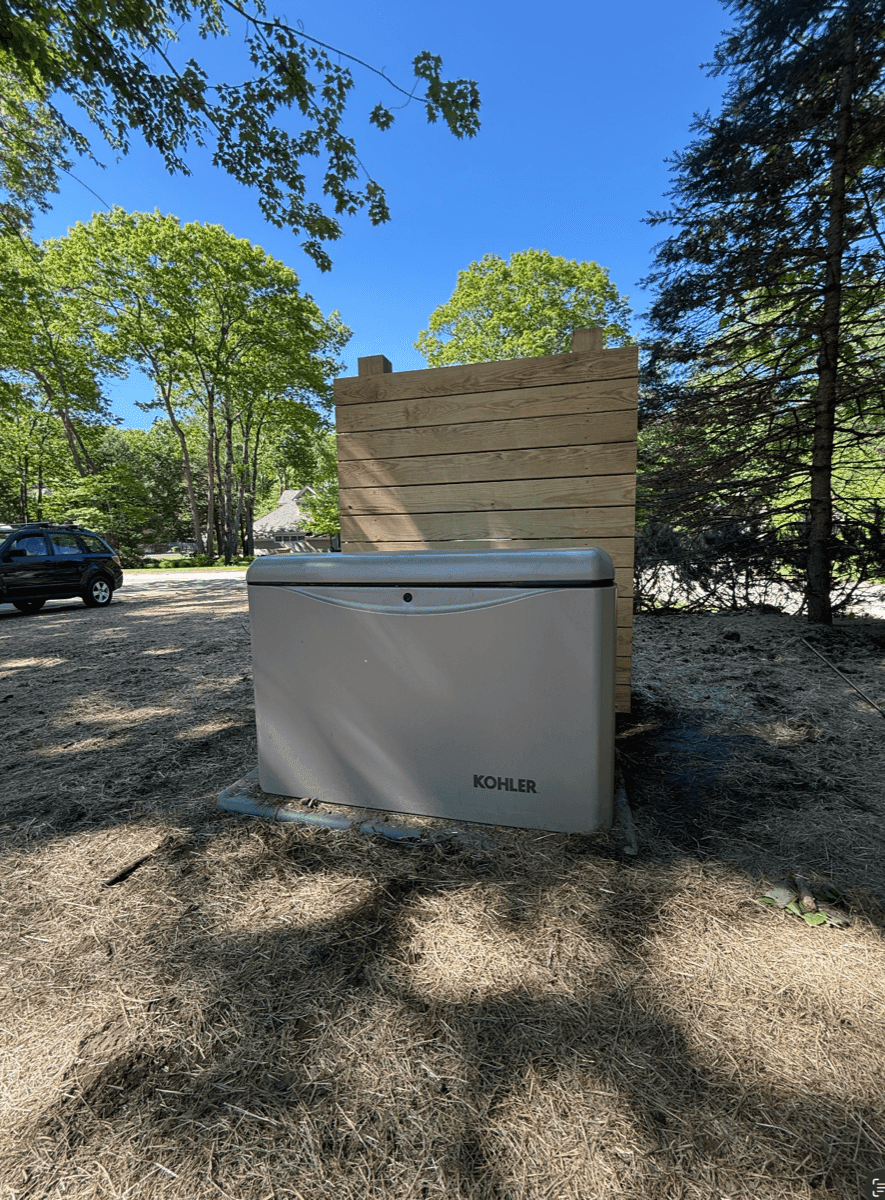
Beyond the village, South Berwick’s back roads run under a lot of trees, and limbs across the lines are a common reason the power goes out. Statewide storms hit here as well, from the October 2017 wind that blacked out over 400,000 Maine accounts, a few for longer than a week, to the January 2024 storms whose federal disaster declaration named York County. CMP brings the lines back, but a house that loses power in winter also loses its heat, since oil and propane boilers and furnaces cannot run their burners, pumps and blowers without electricity.
South Berwick has a fuel option many towns lack. The town is on Unitil’s gas map, and roughly 7 percent of homes already burn utility gas; where a main runs past the house, a standby unit can draw from it and never needs a refill mid-storm. Off the mains, a propane tank holding several days’ supply is the common choice. Deciding what the generator must carry comes first: a well pump where the house has one, a sump pump, the heating system, the refrigerator and any medical equipment, and then everything else the family wants.
An automatic transfer switch disconnects the house from CMP’s lines when the generator starts, which protects the equipment and the line crews working on the street. A portable machine can get the same protection more cheaply through a breaker interlock and an inlet on the outside wall. A unit sited near the Salmon Falls or Great Works rivers needs a look at South Berwick’s Shoreland Zoning Map and a spot above any flood line. Building permits come from the town’s code office; Goodnow Electric does the load math, installs the transfer gear and wiring, and files whatever permits apply. Run a standby unit through its exercise cycle and have it serviced every year, and keep a portable one outdoors and away from windows and doors so exhaust stays out of the house.