About a quarter of Parsonsfield’s homes were built before 1940, a larger share than in Cornish, Limerick or Newfield, and many are farmhouses that received electricity long after they were built. Their services are often the oldest part of the electrical system: a fuse box or small breaker panel, a 60- or 100-amp service, a mast that has weathered decades of ice, and grounding that predates modern rules. Some houses may still carry panels from Federal Pacific, Zinsco or Challenger, brands many electricians recommend replacing. Mix in homes from every decade since, and a panel upgrade here starts with finding out exactly what is on the wall.
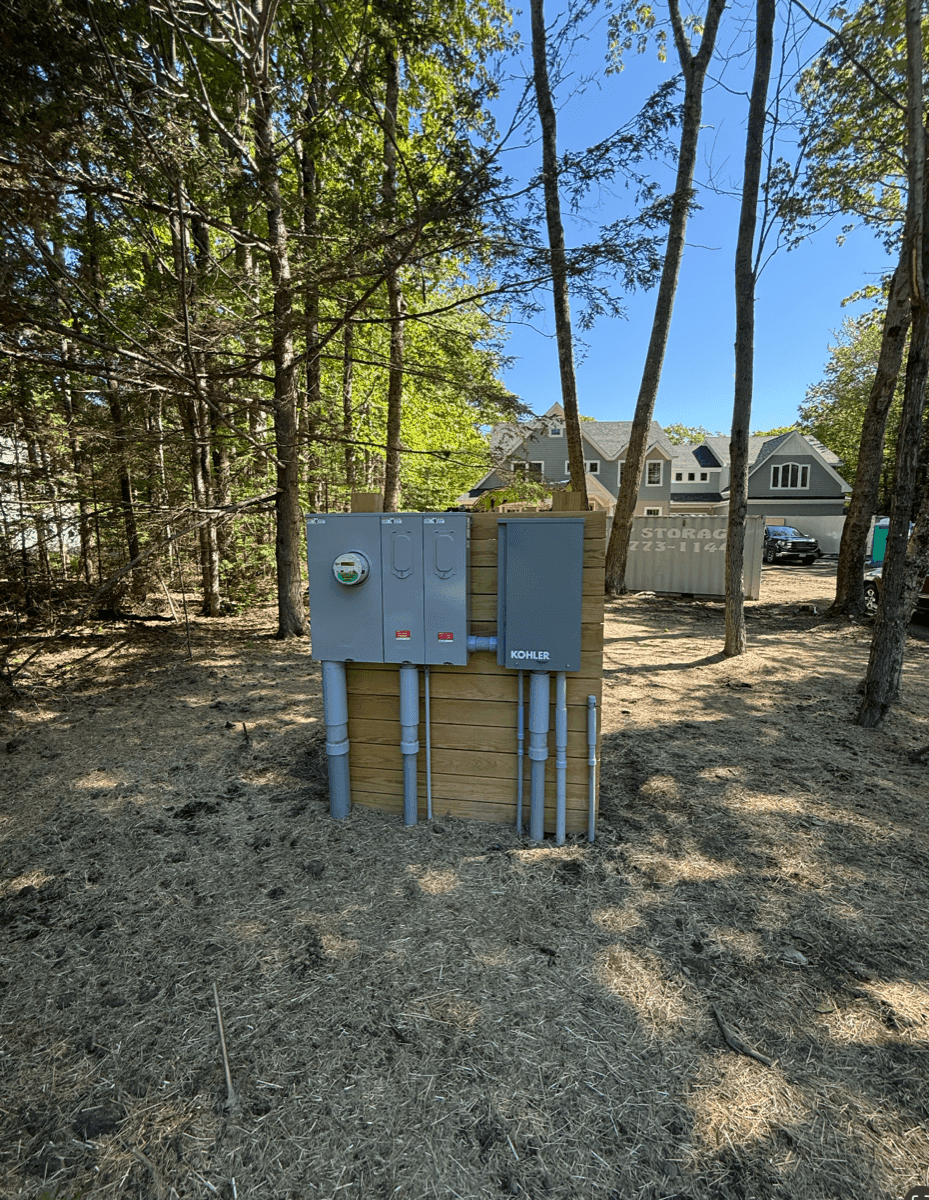
About 13 percent of Parsonsfield homes are mobile homes, more than in Cornish, Limerick or Newfield, and they are a separate case. They often take power from a service on a pole or pedestal rather than from a mast on the home, and upgrades have to respect the home’s own panel and the feeder between them. For conventional houses, a 200-amp upgrade usually means a new panel, meter socket, service-entrance cable, often a new mast, and updated grounding. On a new service or full service replacement for a one- or two-family home, the state electrical board now requires an outdoor emergency disconnect, on the building or a pedestal within sight and 50 feet.
Load is changing even in a town that already leans away from oil. About 54 percent of homes still heat with oil, and wood, propane and a little solar make up most of the rest; converting to heat pumps and adding an EV charger both press on an old service. Parsonsfield does not issue electrical permits itself, so Goodnow Electric pulls the permit through the state Electricians’ Examining Board, coordinates the disconnect and reconnect with Central Maine Power, and schedules the state inspection. Whole-home surge protection can be added at the new panel, and so can a generator inlet for later. The owner is on site, and every estimate is free and written.