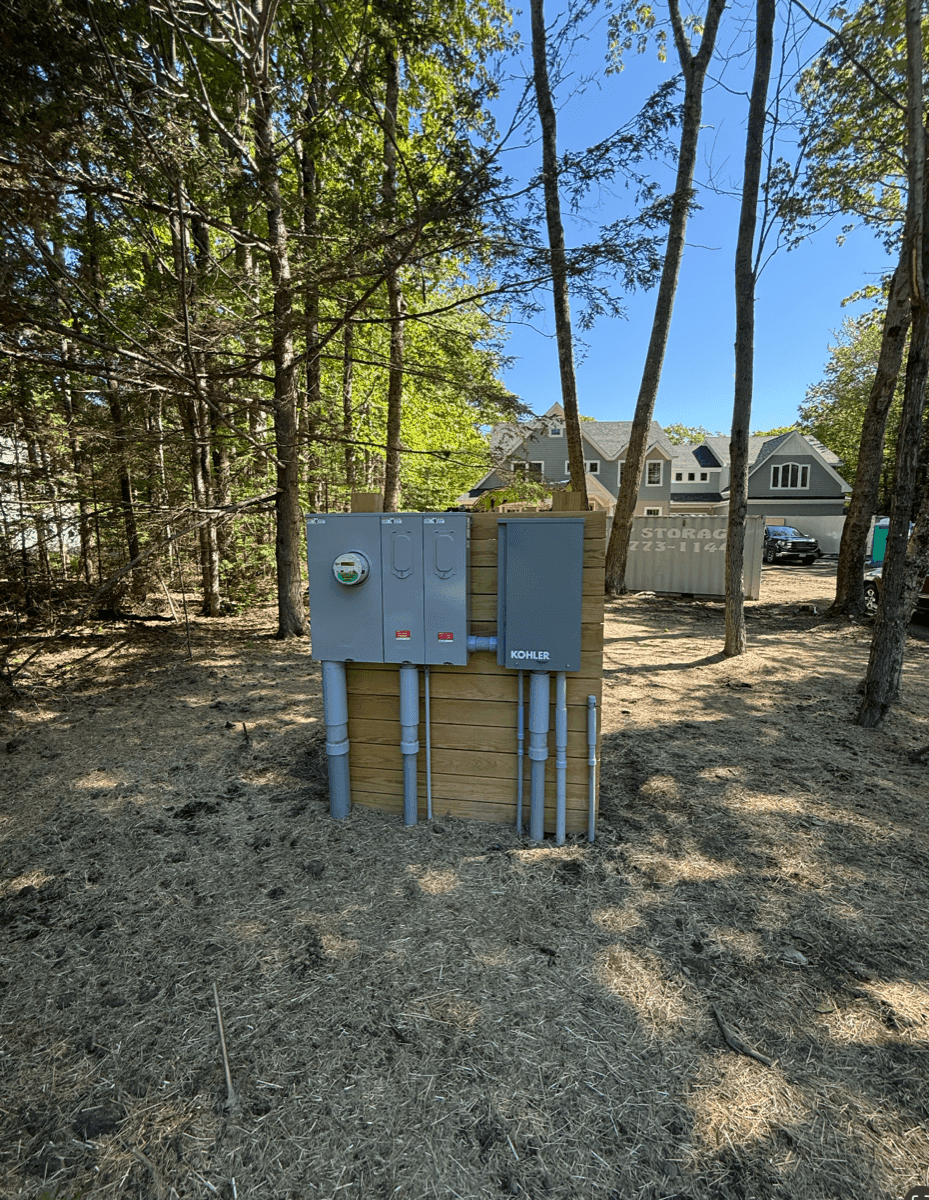
The largest share of Newfield's housing went up in the 1960s and 1970s, about 31 percent by the Census Bureau's count, and the median home dates to 1977. Plenty of those houses were built with 100 amp services sized for a range, a water heater, lighting and a well pump at a time when oil or wood did the heating. Older farmhouses in the village and in West Newfield can carry even smaller services, or fuse boxes that were added long after the house was framed. Those panels are now being asked to support equipment their builders never planned for: cold-climate heat pumps, heat pump water heaters, induction ranges and car chargers.
With about 57 percent of occupied homes still heating with oil, a heat pump conversion is the most likely reason a Newfield homeowner starts asking about panel capacity. A load calculation shows whether the existing service can take the new circuits or whether moving from 100 to 200 amps is the sensible step. Goodnow Electric replaces fuse boxes and panels from brands with known problems, including Federal Pacific, Zinsco and Challenger, and can add whole-home surge protection while the panel is open. A service change means cutting power at the meter, so the disconnect and reconnect with Central Maine Power are scheduled as part of the job rather than left to the homeowner.
Newfield keeps its own electrical permit form among its code office applications, separate from the building permit, so the permit question gets answered before anything is removed from the wall. Seasonal buildings deserve their own look. Around 400 of the town's housing units are held for seasonal use, and a camp being turned into a year-round home usually needs its service, panel and branch circuits reviewed together, since winter heat, a heated water line and a bigger well pump all arrive at once. Estimates are free and put in writing, listing the service size, the panel and any circuits to be added, so each piece can be weighed on its own.