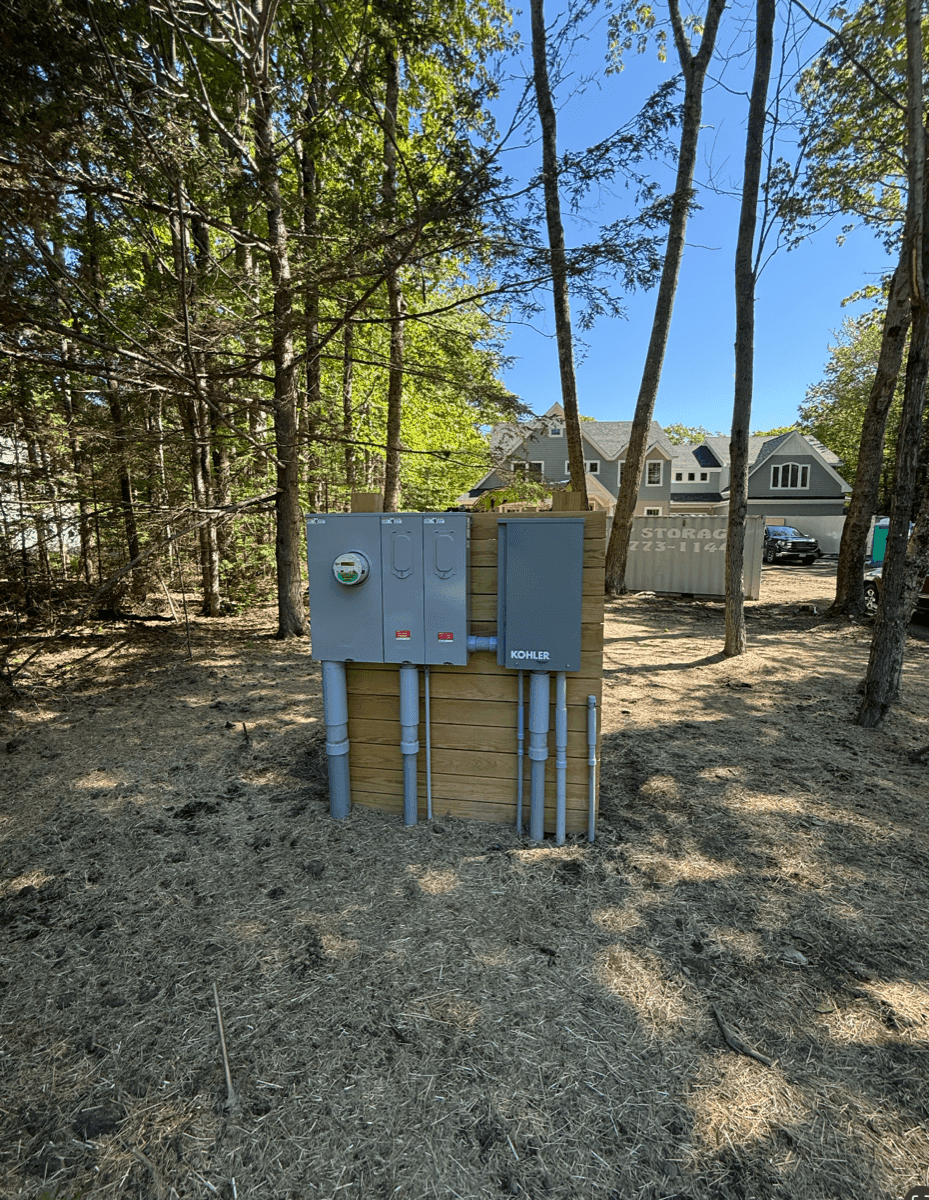
Acton's housing splits into two very different groups, and both tend to end up needing more electrical capacity. The first is its older year-round stock: about 16 percent of homes predate 1940 and about 31 percent predate 1960, according to the Census Bureau, so a noticeable number of farmhouses along Route 109 and in the villages still run on fuse boxes, 60 amp services or panels added piecemeal over the decades. The second is its camps. Just over half of the town's housing units are held for seasonal use, and many were built for a summer refrigerator, a few lights and a water pump, not for electric heat and a full kitchen. Split-bus panels with no single main breaker also turn up in houses of the 1950s through 1970s.
The pressure to upgrade usually arrives with heat pumps. Oil heats about 54 percent of occupied homes, and swapping part or all of that for cold-climate heat pumps can add enough winter load to push an older service past its limit, especially when an electric water heater and a well pump already share it. A load calculation shows whether 100 amps can still work or whether 200 amps is the better foundation. Goodnow Electric replaces fuse boxes and problem panels such as Federal Pacific, Zinsco and Challenger, installs whole-home surge protection, and schedules the Central Maine Power disconnect and reconnect that any service change requires.
Acton's land use fee schedule covers building, plumbing, shoreland and growth permits but lists no local electrical permit, so electrical permitting and inspection follow the state's rules. The state board's guidance to utilities says every new service and every full service replacement on a one- or two-family home now needs an emergency disconnect outside the building, on the wall or a pedestal within sight. On a lake lot, remember that any new or renewed utility service also runs through Central Maine Power's Form 1190, a town official's certification that shoreland and subdivision requirements are met. Estimates for this work are free and written, and Goodnow Electric pulls the state permit where one is required and is there for the inspection.