Lighting on a Raymond lake lot has two audiences: the people using it and the people across the water. Floodlights on a camp or boathouse carry a long way over Sebago, Panther Pond or Crescent Lake at night, so shielded fixtures aimed downward, warm color temperatures and motion sensors that switch lights off when no one is there keep a shoreline dark and neighbors happy. Bright fixtures shining straight across the water can also confuse boaters at night, so aiming lights down at the dock and path rather than out at the lake is both courteous and safer. Low-voltage path and step lighting down to the water makes steep lakefront lots safer without lighting up the bay.
Long gravel drives and private lake roads are common in Raymond, and a light at the road or the mailbox helps visitors and emergency crews find a house number after dark. Sensor lights over the garage and front steps, photocell fixtures that come on at dusk over a shed or bunkhouse, and timers or smart controls for seasonal homes, so a camp looks occupied while it sits empty, are typical requests. Near the water, fixtures should be rated for wet locations and mounted with corrosion-resistant hardware, and any new fixtures or posts close to the shore should fit within the town's shoreland zoning rules.
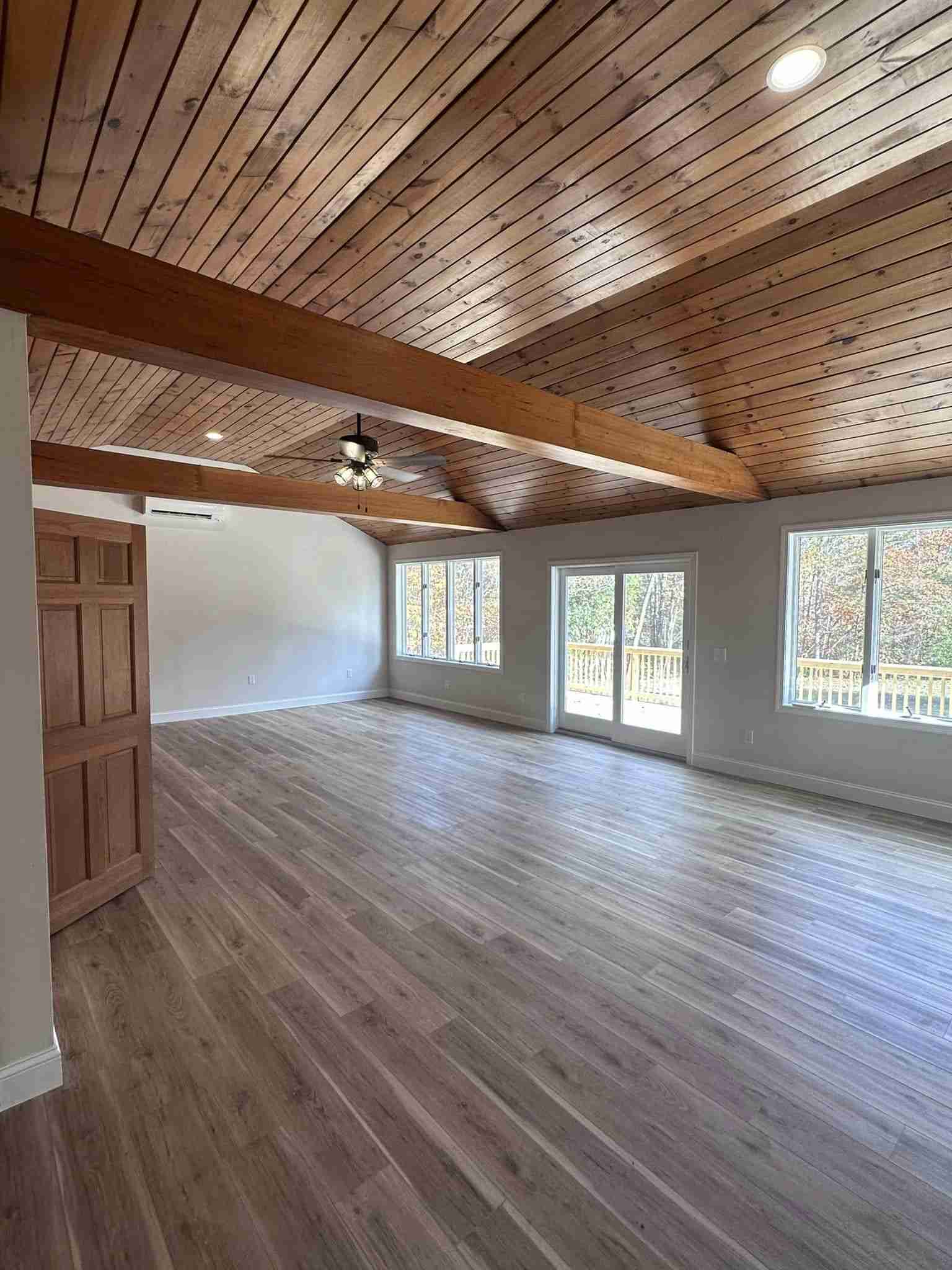
Inside, older camps and cottages often have a single bare fixture per room, and a winterizing project is a good time to add recessed LED lighting, under-cabinet kitchen lights, ceiling fans and dimmers. LED retrofits cut the lighting load on a small service, freeing capacity for heat pumps and a water heater that has to run all winter. Whether the job is a dock light, a string of path fixtures or new cans in a camp kitchen, Goodnow Electric wires it and files a Raymond permit whenever one applies. A free written estimate covers fixtures and wiring runs before anything is ordered, including any trench needed to reach a dock or a light at the end of the drive, and the shoreland questions that come with digging near the water.