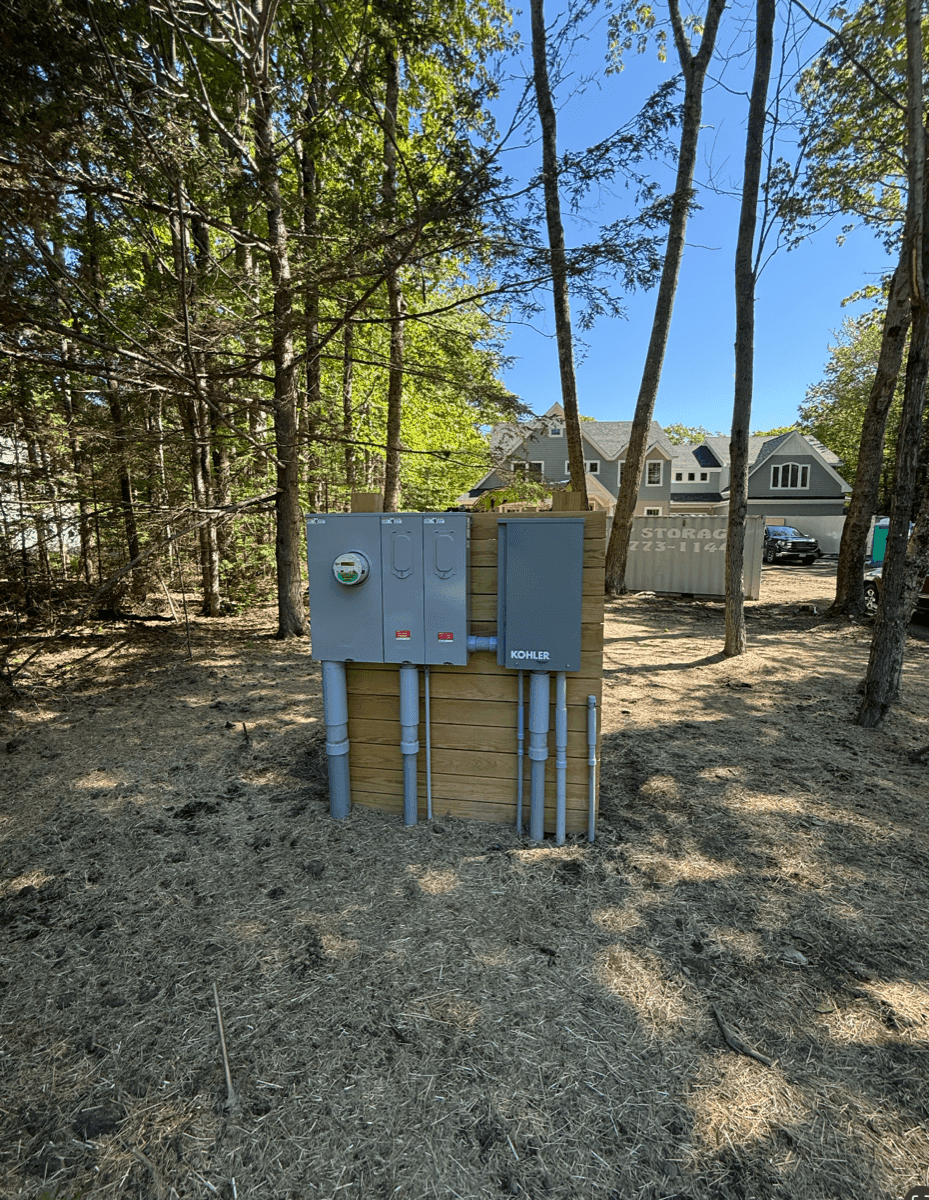
Almost two in five Yarmouth homes were built between 1960 and 1979, the largest of the census age bands for the town. Houses from those decades usually came with 100-amp services and early breaker panels, sometimes Federal Pacific, Zinsco or Challenger equipment that electricians now recommend replacing because of how those breakers have held up. Fifty years on, those panels are often full, with tandem breakers squeezed in for a basement workshop or a later kitchen, and the main breaker and bus bars have spent decades heating and cooling under load. A panel that feels warm, a breaker that will not stay set, or a main that trips when the dryer and range run together are all signs that the service has run out of margin.
The pressure is rising because oil still heats most of these homes. Yarmouth's own energy coaching program steers residents toward heat pumps, and each system that replaces an oil boiler adds winter load that a 100-amp service was never sized for. An EV charger, a heat pump water heater or an induction range adds more. The standard remedy is a 200-amp service with a new panel and whole-home surge protection, retiring any fuse box or problem panel along the way, and it begins with a load calculation that counts the heat pumps and chargers you plan to add, not just today's appliances. Where a basement is finished, the panel location, working clearance and any new grounding electrode connections are planned so the upgrade does not mean tearing out a wall that was just built, and circuits are labelled clearly so the next person to open the panel can read it.
Yarmouth has its own electrical inspector, so a service change is permitted and inspected by the town rather than the state, with electrical inspections held on Mondays and Wednesdays. The town notes that applications can take about 30 days to reach review during busy periods, so it pays to apply early. Goodnow Electric emails the application, meets the town's electrical inspector, and arranges the utility's meter pull and reconnection with Central Maine Power. A full service replacement on a one- or two-family home now requires an outdoor emergency disconnect near the meter, which is included in the written estimate from the start.