Fuel oil is still the main heating fuel in about 43 percent of occupied Falmouth homes, according to the Census Bureau's 2020-2024 American Community Survey, with propane in about 21 percent and piped gas in about 19 percent. Only about 11 percent heat mainly with electricity today. That gap is where most panel questions start. A ducted or multi-zone cold-climate heat pump replacing an oil boiler adds one or more 240-volt circuits, and a heat-pump water heater, induction range or electric car can follow within a few years. A house wired for oil heat and a gas or propane range was never sized for that combination, and the 60-amp or 100-amp services still found in older parts of town have even less margin.
The age of the house tells you how much room there is. Falmouth's median home was built around 1986, and roughly 58 percent of the town's housing went up after 1980, so many panels are 150 or 200 amps with most of the slots already spoken for. The older end is a different story: about 26 percent of homes predate 1960, including Foreside houses from the trolley era and older homes along Gray Road, and those can still run on a 100-amp service or less. A load calculation, done before any equipment is ordered, shows whether you need a larger service, a subpanel, load management, or nothing at all.
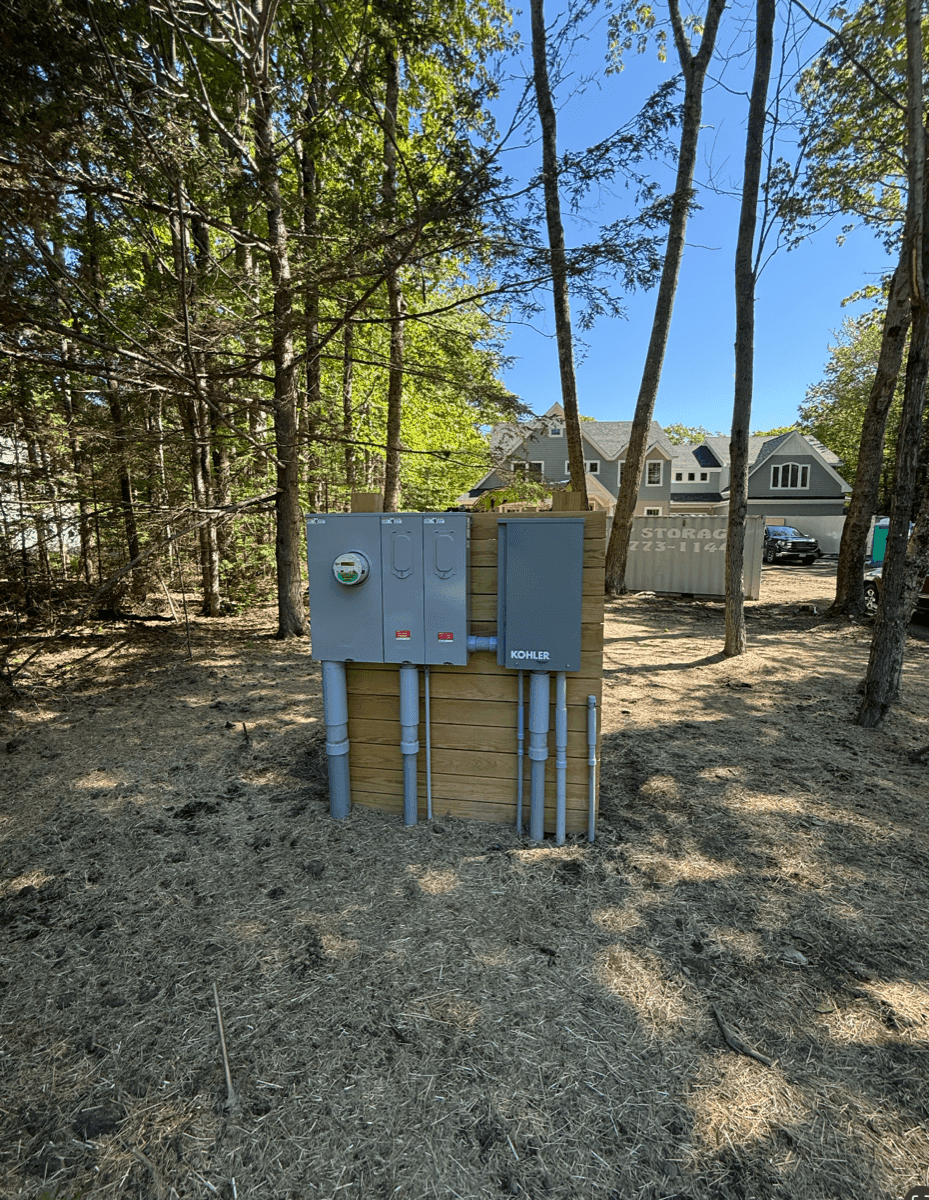
Falmouth's Code Enforcement Division issues electrical permits itself and inspects the work locally, along with building, plumbing and heating permits. Goodnow Electric pulls that permit, schedules the town inspection, and arranges the disconnect and reconnect with Central Maine Power when the meter or service entrance changes. A service change is also the moment to retire a Federal Pacific, Zinsco or Challenger panel, a common find in houses from the 1960s and 1970s, and to add whole-home surge protection for the heat pump and appliance electronics you are about to rely on. Every estimate is written and free, and the owner is on site for the work.