Every Baldwin house draws its water from a private well, and the draft comprehensive plan notes there is no public sewer, so a CMP outage silences the well pump together with the lights, the boiler or furnace and the refrigerator. Falling trees along wooded back roads cause most of the town's outages. Statewide, the October 2017 windstorm left more than 400,000 outages, some over a week long, and the December 2023 storm added about 300,000. A Baldwin January without heat or running water for several days is a real problem, not an inconvenience.
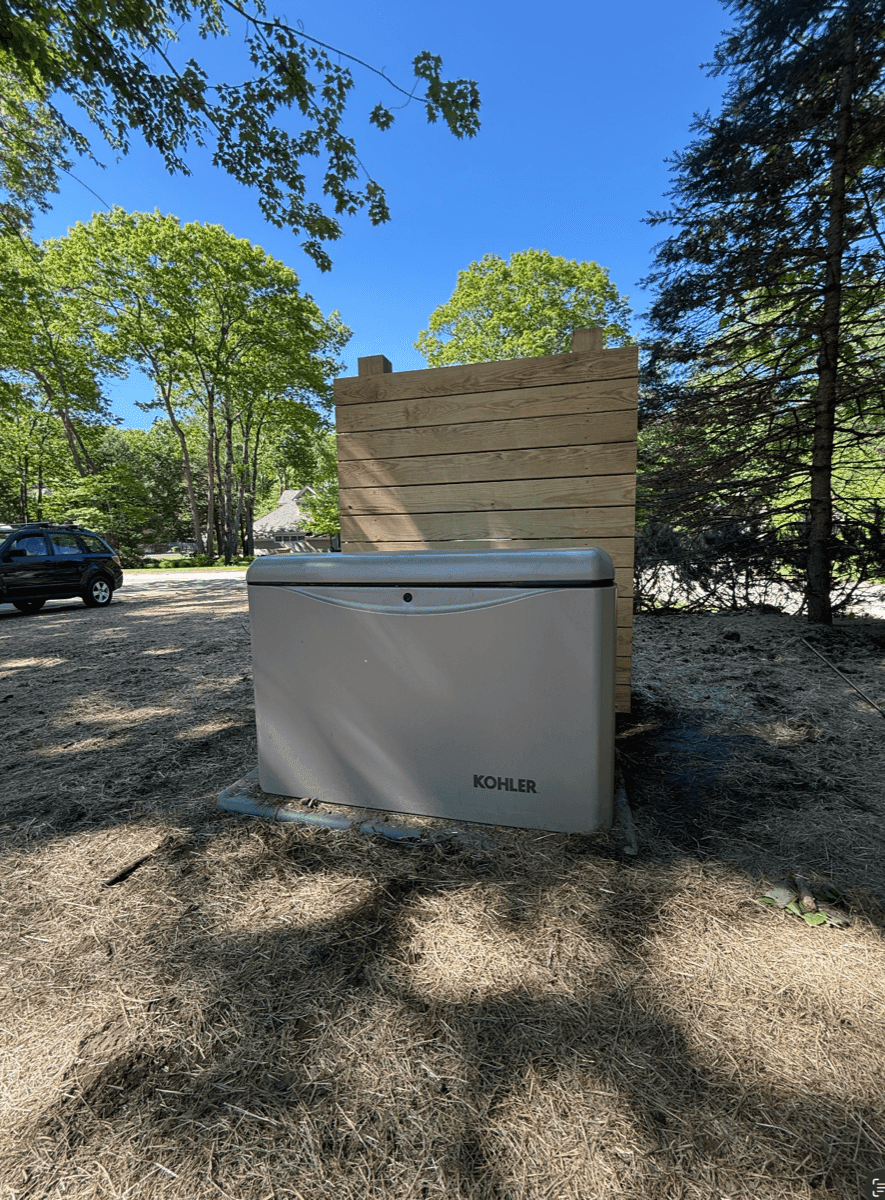
The fullest fix is a standby generator wired through an automatic transfer switch. When the grid drops, the switch disconnects the house from the utility lines, the engine starts, and within seconds water, heat and refrigeration return. Baldwin has no utility gas, so standby units burn propane. Houses that heat partly or fully with wood, about 17 percent here, can often get by with a smaller setup that covers the well, the refrigerator and a handful of circuits. For a portable machine, a rated inlet paired with an interlock keeps it from feeding power back onto the utility line. Goodnow Electric sizes the system around the loads that matter most, starting with the well pump.
Along the Saco, location needs care. The Saco River Corridor Commission's jurisdiction covers 500 feet back from the river's normal high-water line and as far as 1,000 feet inside the 100-year floodplain, so a pad or propane line in that zone has to fit the commission's rules. Shoreland zoning covers ground near ponds such as Sand Pond as well. The town issues no permit for a generator; on a single-family home the master electrician verifies the job. Goodnow Electric handles any coordination with CMP, and the free written estimate spells out the unit size, which circuits it carries and where the generator and tank will stand on the lot. Before that visit, list the rooms and appliances your household cannot do without during a long outage, so the plan matches how the house is really used.