Forest covers about 90 percent of Sebago, according to the town's comprehensive plan, and most homes are fed by Central Maine Power lines that run through those woods. When wind, ice or heavy wet snow brings down trees, the lines come down with them. Statewide, the October 2017 windstorm produced over 400,000 outages, a number of them lasting past a week, and roughly 300,000 more followed in the December 2023 storm. Sebago has no public water or sewer; residents rely on individual wells, so an outage stops the well pump, the heating system and any sump pump at the same moment. In a January storm, a house without heat or running water becomes hard to stay in within a day, and pipes in an unheated camp can freeze well before the lines are repaired.
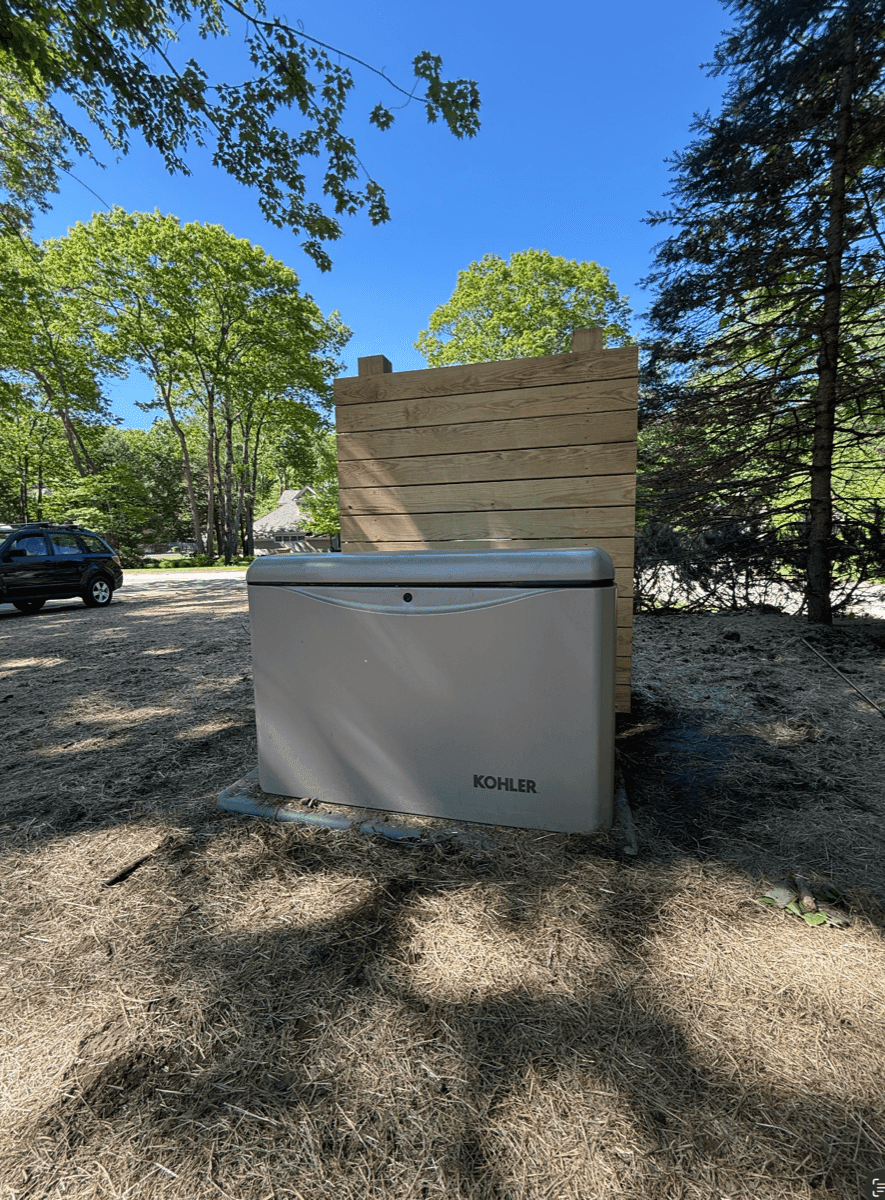
The fullest protection is a standby generator wired through an automatic transfer switch, which senses the outage, disconnects the house from the utility, starts itself and restores power in seconds. Natural gas is not available in Sebago, so standby units run on propane, which about a fifth of local homes already use for heat. Houses that heat with wood, about 14 percent here, still need power for well pumps and lights, and a smaller system may be enough. A portable unit can feed chosen circuits safely through a rated inlet and an interlock kit, with none of the backfeed risk of a cord run into an outlet. Goodnow Electric matches each system to what a household here cannot do without, beginning with the well and the heat.
Sebago's own electrical permit form lists generators as a separate item, so the installation is permitted and inspected by the town. On lakefront and pond lots, the shoreland zone reaches 250 feet back from Sebago Lake and from Peabody, Hancock, Barker and the town's other great ponds, and generator pads and trenches should be placed with shoreland rules in mind. For seasonal camps left empty in winter, a standby unit keeps heat running during an outage while no one is there to notice. Before any work, a free written estimate spells out the generator's size, which circuits it will run, and where the unit and its fuel will go.