Electrical Work in Berwick
Berwick sits on the Salmon Falls River across the bridge from Somersworth, New Hampshire, with its old mill village by the water and newer neighborhoods spreading out along Routes 9 and 236 toward Diamond Hill and the Little River. Goodnow Electric is a Westbrook contractor with a Maine master electrician license. This page covers what matters for electrical work in Berwick: a housing stock younger than South Berwick’s or Eliot’s, a large share of mobile homes, heavy use of oil and wood heat, storms, and permits.
Berwick Homes and Their Wiring
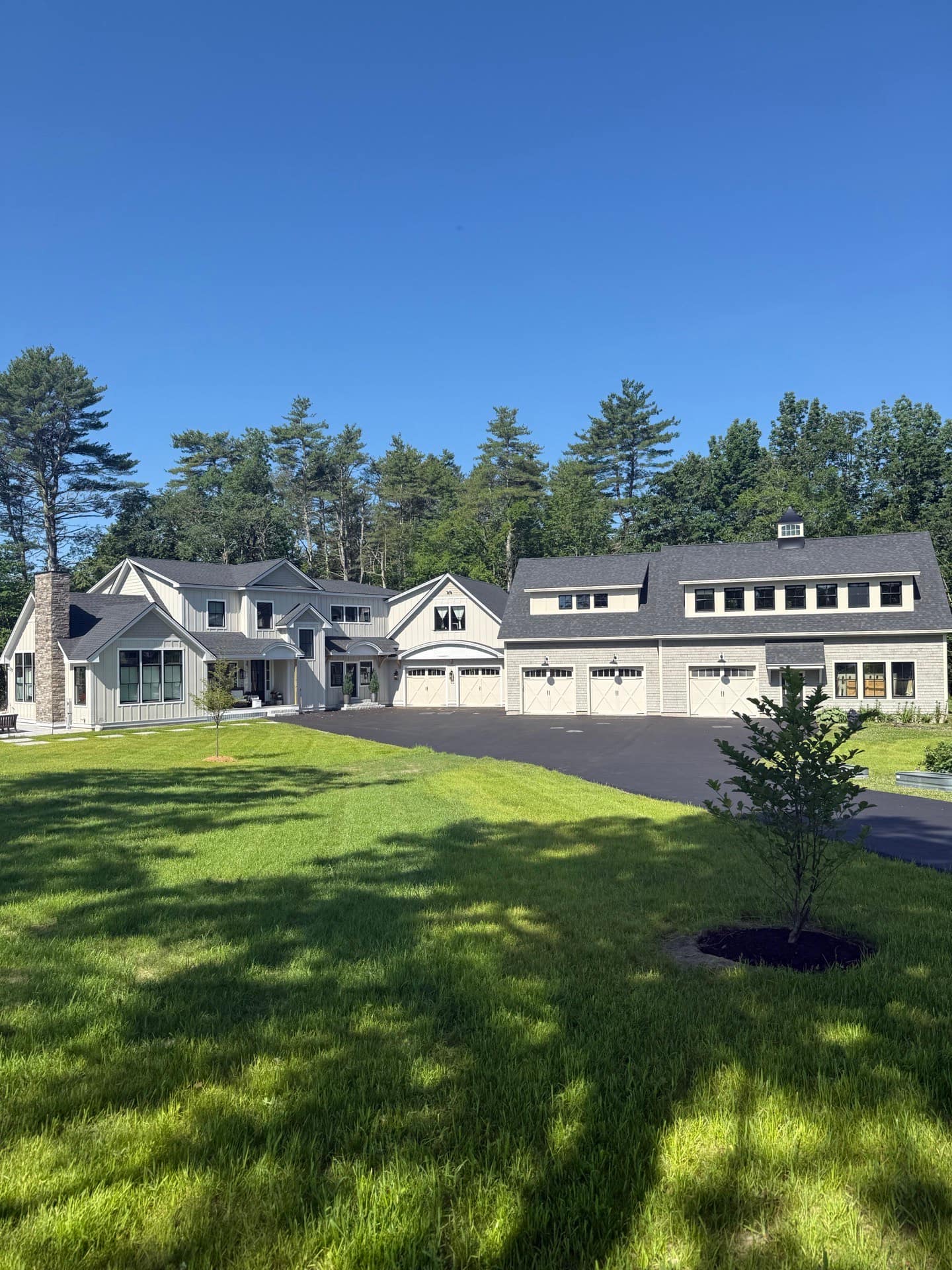
By the Census Bureau’s 2020 to 2024 figures, roughly 8,200 people live in about 3,400 Berwick homes, and the median one dates from 1989, which makes this stock younger than South Berwick’s, Eliot’s or Kittery’s. Houses from 2000 onward account for some 37 percent, the 1980s and 1990s add 32 percent more, and the pre-1940 village core is about 16 percent. Single-family detached houses make up around 74 percent, owners live in about 87 percent, and duplexes through fourplexes are a sliver at about 4 percent. What sets Berwick apart is its mobile homes, roughly 13 percent of all housing. Electrically, expect plenty of modern 200-amp services, a smaller group of old village houses, and a sizable share of mobile homes whose service rules differ.
Heating, Heat Pumps and EVs in Berwick
Fuel oil heats about 59 percent of Berwick’s occupied homes and propane about 17 percent. Wood is unusually important here, at about 11 percent, higher than in Eliot, Kittery, South Berwick or York, and electricity heats about 8 percent. Utility gas reaches only about 2 percent, and Unitil’s published list of Maine gas towns includes South Berwick and North Berwick but not Berwick itself, so standby generators here generally run on propane. Replacing oil with heat pumps is the largest new electric load most Berwick houses will ever see, and for a household adding an electric car, Efficiency Maine puts $400 toward a Level 2 charger programmed to sit idle through the weekday evening peak.
Power Outages and the Grid in Berwick
On the Maine Public Utilities Commission’s map, Berwick falls in Central Maine Power territory. Beyond the village the roads wind through woods and fields, so the usual culprit when lines come down is a tree or a heavy limb. Two recent storms set the scale: in October 2017 a windstorm darkened over 400,000 Maine customers, the worst weather outage the state has recorded, with some waiting more than a week, and the storms of January 9 to 13, 2024 brought a federal disaster declaration that reached York County. Maine Water runs Berwick’s public water under contract with the town, but homes past the mains rely on well pumps, and those quit when the power does.
Getting to Know Berwick
Berwick was incorporated on June 9, 1713, the ninth town in what is now Maine, and once included today’s South Berwick and North Berwick, which were set off in 1814 and 1831. The first schoolhouse in the state was built here in 1719. The village grew up in step with Somersworth across the river, and industry came in the form of Nute’s Shoe Factory and then Prime Tanning, which closed its Berwick headquarters in 2008; the town announced The Edge at Berwick, a mixed-use development on the old tannery property, in 2021. Berwick High School and Memorial Chapel are on the National Register.
Electrical Permits and Inspections in Berwick
Code enforcement in Berwick covers the Land Use Ordinance and subdivision rules, and the same officer inspects buildings and plumbing, issuing building, plumbing and septic permits under Maine’s Uniform Building and Energy Code, with inspections booked for Mondays, Tuesdays or Thursdays. No electrical permit appears on the town’s list. Under the Electricians’ Examining Board’s rules for places like this, commercial work, two-family or larger dwellings and any building with two or more meters need a state permit, while a single-family house or a manufactured home outside a park does not. Jobs started from July 1, 2026 onward fall under the 2026 edition of the National Electrical Code.