Berwick’s housing is newer than South Berwick’s or Eliot’s, with a median year built of 1989 and more than a third of homes built since 2000, so many houses here already have 200-amp services. The upgrades that do come up tend to fall into three groups. The first is the village’s older houses, about 16 percent of the stock predates 1940, where fuse boxes, 60-amp services and early breaker panels still turn up. The second is the 1980s and 1990s housing, about 32 percent of the town, often on 100-amp or 150-amp panels that were sized for oil heat and never expected heat pumps or an electric vehicle.
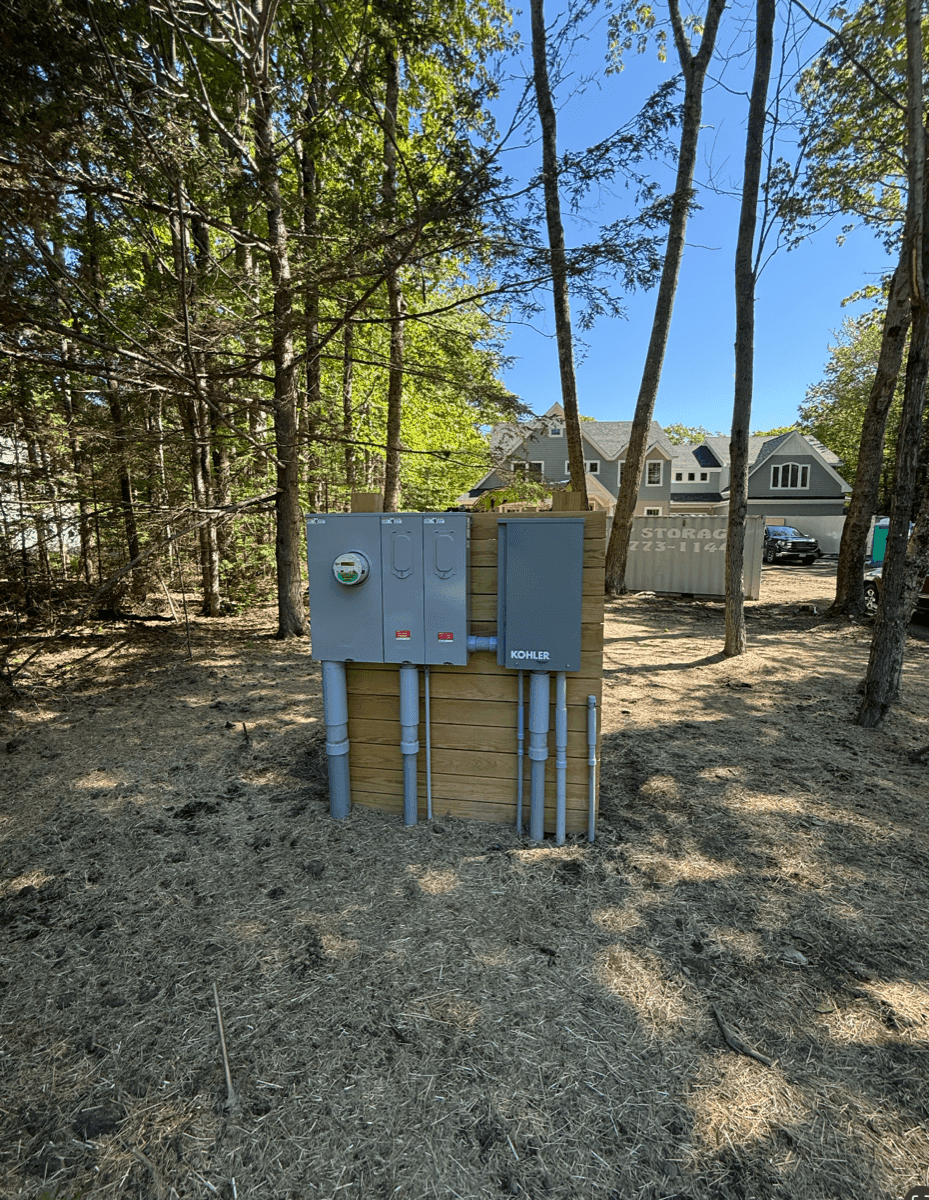
The third group is particular to Berwick. About 13 percent of the town’s homes are mobile homes, far higher than in Kittery, Eliot, York or South Berwick, and they come with their own electrical rules. The National Electrical Code generally calls for a mobile home’s service equipment to be mounted on a pole or pedestal beside the home rather than on the home itself, feeding the panel inside through a sized feeder. Older units may have undersized feeders, aluminum wiring or panels that have been patched over the years. When a mobile home owner adds a heat pump or replaces electric heat, the pedestal, the feeder and the panel all have to be checked together.
Central Maine Power disconnects and reconnects the service for any upgrade, and Goodnow Electric coordinates that with CMP. State guidance sent to utilities calls for an outside emergency disconnect on new and fully replaced services for one- and two-family homes. Berwick’s code office issues building, plumbing and septic permits but lists no electrical permit, and the state board’s rules call for a state electrical permit on larger buildings, such as two-family homes, apartments and commercial property, or buildings with two or more meters. Replacing a Federal Pacific, Zinsco or Challenger panel, adding whole-home surge protection or moving from 100 to 200 amps starts with a load calculation and a free written estimate.