A Harrison outage tends to take several systems down at once. The well pump stops, so the faucets and toilets stop. An oil or propane boiler stops, because its burner and circulator need power even when the fuel tank is full. A sump pump quits in the middle of a spring thaw. The large statewide storms show how long that can last: the October 2017 nor'easter produced more than 400,000 outages in Maine, some lasting over a week, and the December 2023 nor'easter produced about 300,000. On roads where the lines run for miles through the trees, the repair crews reach the last houses last, and a family can spend days hauling water and emptying the refrigerator.
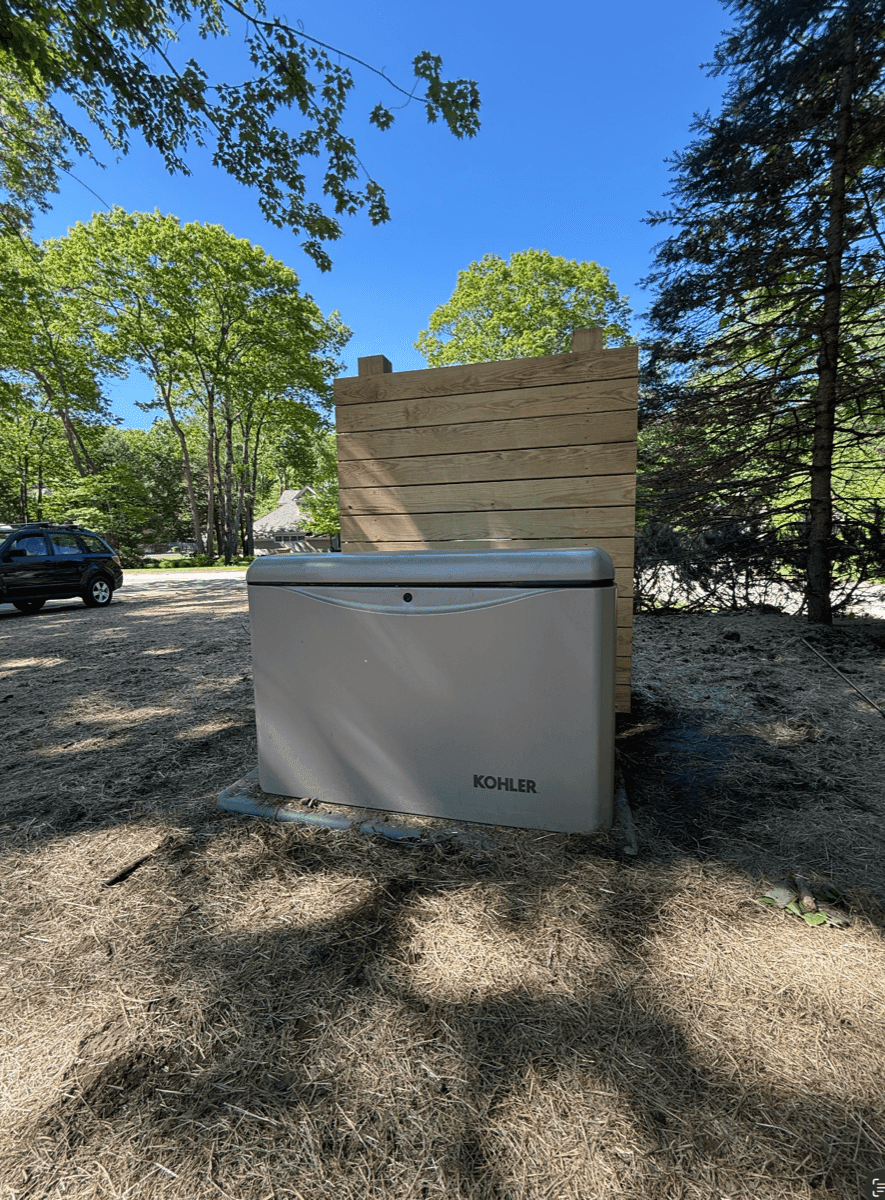
Propane is the practical fuel for most standby generators in town. About 24 percent of homes already heat with propane, so many properties have a tank and a delivery account, and piped gas reaches almost nobody. Sizing depends on the house. A home that keeps a woodstove for heat may only need a unit that runs the well pump, refrigerator, freezer, lights and a few outlets; a home on heat pumps needs enough capacity to carry them through a cold snap. Goodnow Electric installs automatic transfer switches for standby units and interlock kits with outdoor inlets for portables, and adding a transfer switch alone does not trigger the state's outdoor disconnect requirement unless the service is upgraded.
Placement deserves care on a lake lot. Harrison's code officer is also its shoreland zoning administrator, and a generator pad, fuel tank or trench close to Long Lake, Crystal Lake or Island Pond should be checked with the town before any ground is disturbed. The unit also needs exhaust clearance from windows, doors and air intakes, a pad above standing water, and a spot away from snow sliding off the roof. For a camp left empty in winter, an automatic generator that starts on its own can keep the heat on and the pipes from freezing. The electrical work is permitted and inspected under the state system.