Every Casco property draws water from its own well; the comprehensive plan states the town has no public supply and does not expect one soon. A CMP outage therefore shuts off the tap as well as the lights, the furnace blower and the fridge. Beyond the commercial zones on the main roads, houses hang off single-phase lines strung through dense woods and around the lakes, exactly where wind and ice hit hardest. Maine has seen what that means. The October 2017 windstorm produced over 400,000 outages statewide, some of them longer than a week, and the December 2023 storm added roughly 300,000.
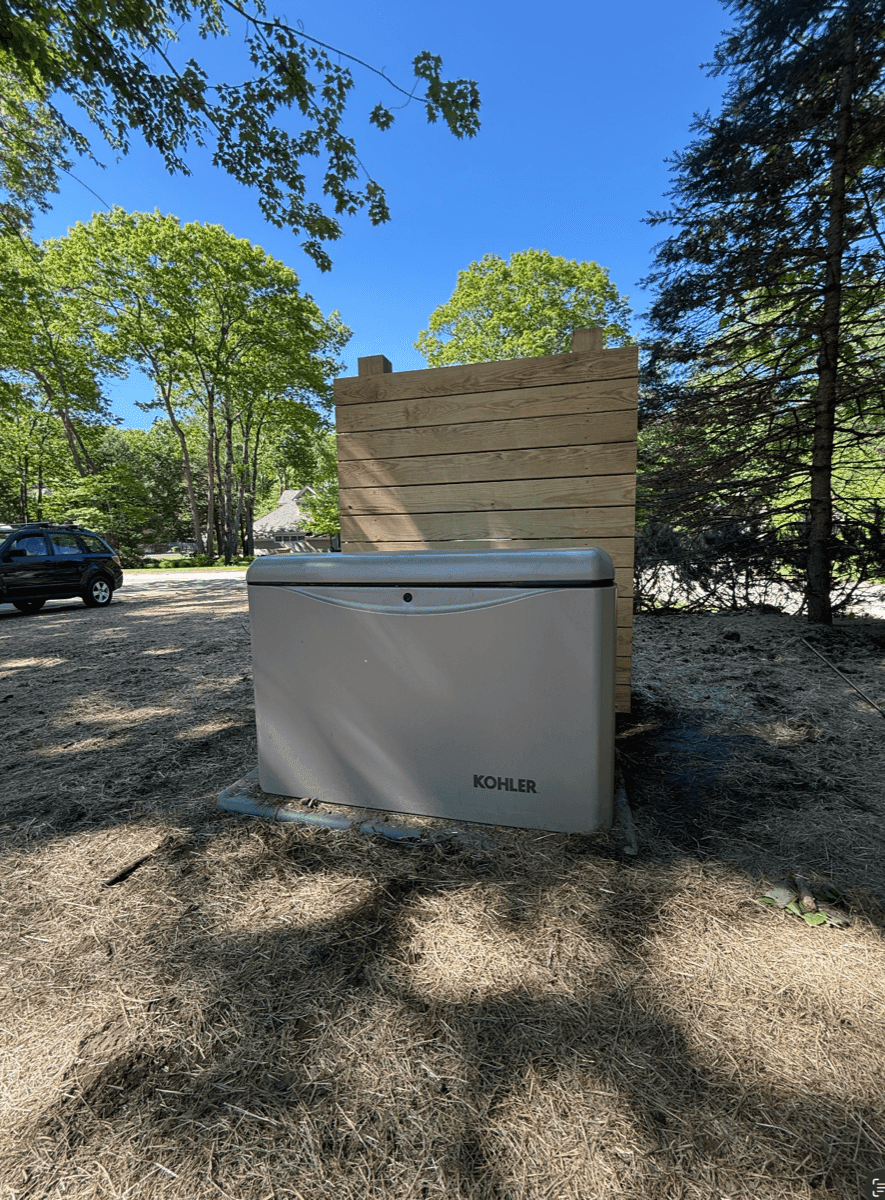
The fullest protection is a standby generator wired through an automatic transfer switch. When the grid drops, the switch cuts the house off from CMP's lines, the engine starts, and within seconds the pump, heat and refrigerator are running again. With virtually no gas main in town, Casco standby units burn propane, the fuel that already heats close to one home in five. On a tighter budget, a portable generator can feed selected circuits through an inlet and a panel interlock, which keeps power from flowing back onto the utility line the way a homemade cord can. Goodnow Electric sizes either setup around the loads you actually have, beginning with the well pump and the heating system, the two circuits a Casco winter cannot do without.
On a lake lot, where the unit goes takes the most thought. Casco's shoreland zone reaches 250 feet back from the water at Sebago, Pleasant, Crescent and Thompson lakes and at Thomas Pond, and any project inside it needs a town shoreland permit. A concrete pad, a propane line and a trench all disturb soil close to the water, so settle the spot with the code office before anything else. A camp left empty all winter gains something extra from a standby unit: the heat keeps running through an outage, so pipes do not freeze with nobody there. Goodnow Electric lines up any CMP work, pulls a permit where state rules call for one, and puts a free written estimate in your hands before equipment is ordered.