About one Standish home in six was built before 1940, and in villages like Standish Corner and Steep Falls many of those houses were wired long before anyone planned for electric heat or a car in the garage. Services of 60 or 100 amps, screw-in fuse boxes, and panels from makers with poor track records, such as Federal Pacific, Zinsco and Challenger, still turn up in houses of that era and in the ranches built through the 1970s. The pressure point in Standish is heating. With roughly six in ten homes still burning oil, the common next step is a cold-climate heat pump system, and each outdoor unit needs its own 240 volt circuit. Add an induction range or an EV charger and a 100 amp service runs out of room.
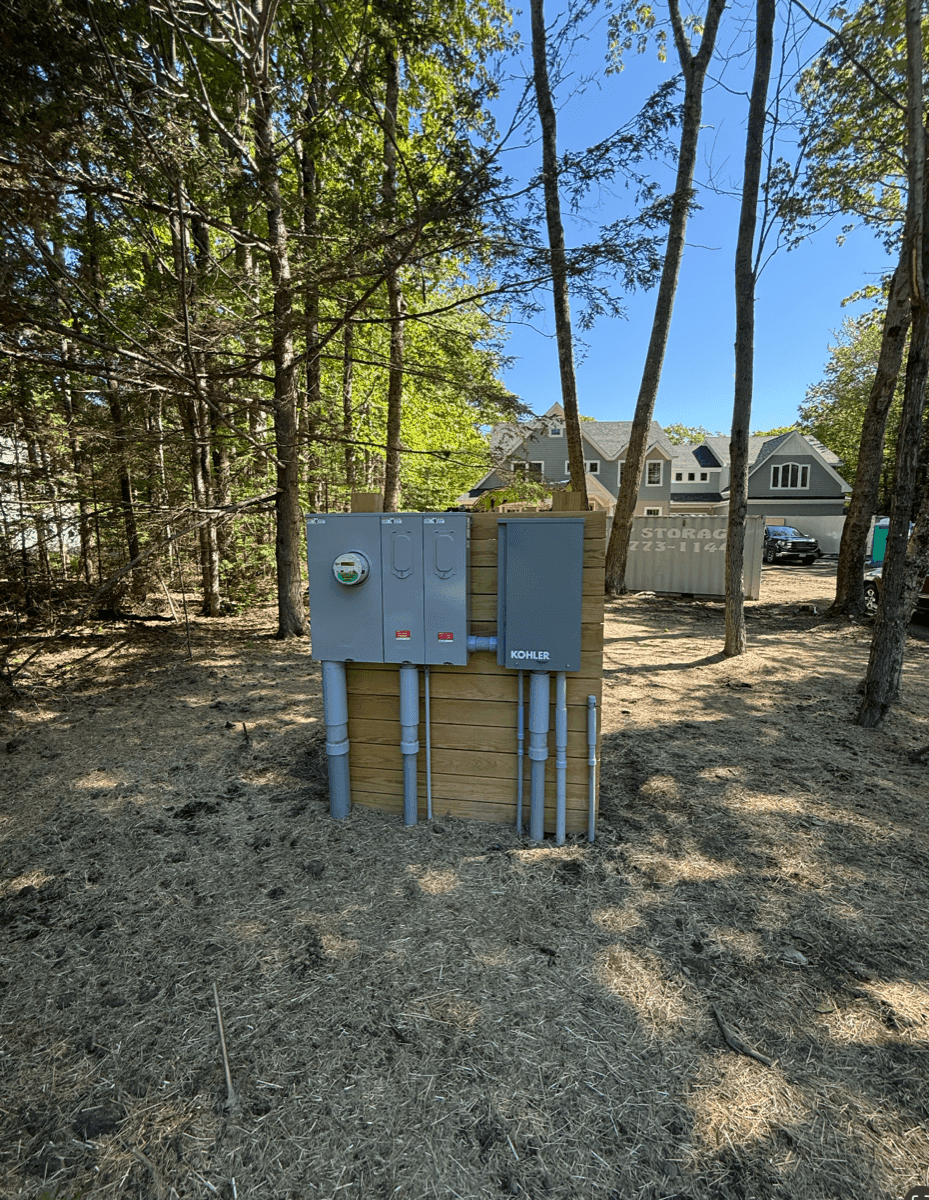
A service upgrade in Standish runs through the town, not the state. Standish issues its own electrical permits, and its code office inspects both the new service and any rough-in wiring before walls are closed. Central Maine Power has to disconnect and reconnect the service, and Goodnow Electric schedules that with CMP and pulls the town permit as part of the job. Maine's Electricians' Examining Board has also told utilities that one- and two-family homes getting a full service replacement now need an emergency disconnect outside the building, either on the wall or on a pedestal within sight and within 50 feet. Plan for that when you picture where the new meter and main breaker will go.
Not every Standish house presents the same problem. Newer 3- and 4-unit buildings, such as the townhouses of the Highlands development, need a meter and panel for each unit. Mobile homes, about 7 percent of local housing, have their own service arrangements and often sit on a pole or pedestal service. Seasonal camps near the lake that are being turned into year-round homes almost always need a larger service and new circuits for heat. Whatever the house, the work starts with a free written estimate, a load calculation, and the owner of the company on site.