Close to a third of Kennebunk's homes were built before 1960, and many of them have a service that was sized for lights, a refrigerator and an oil burner. A 60 or 100 amp panel, a fuse box in the cellar, or a breaker panel with every slot filled is common in the village and along the older roads. The pressure on those panels is growing. With about 56 percent of the town still heating with oil, a switch to cold-climate heat pumps adds several 240-volt circuits at once, and the load peaks on the coldest nights of the year. Add a Level 2 car charger, an induction range or an electric water heater and a 100 amp service can run out of room.
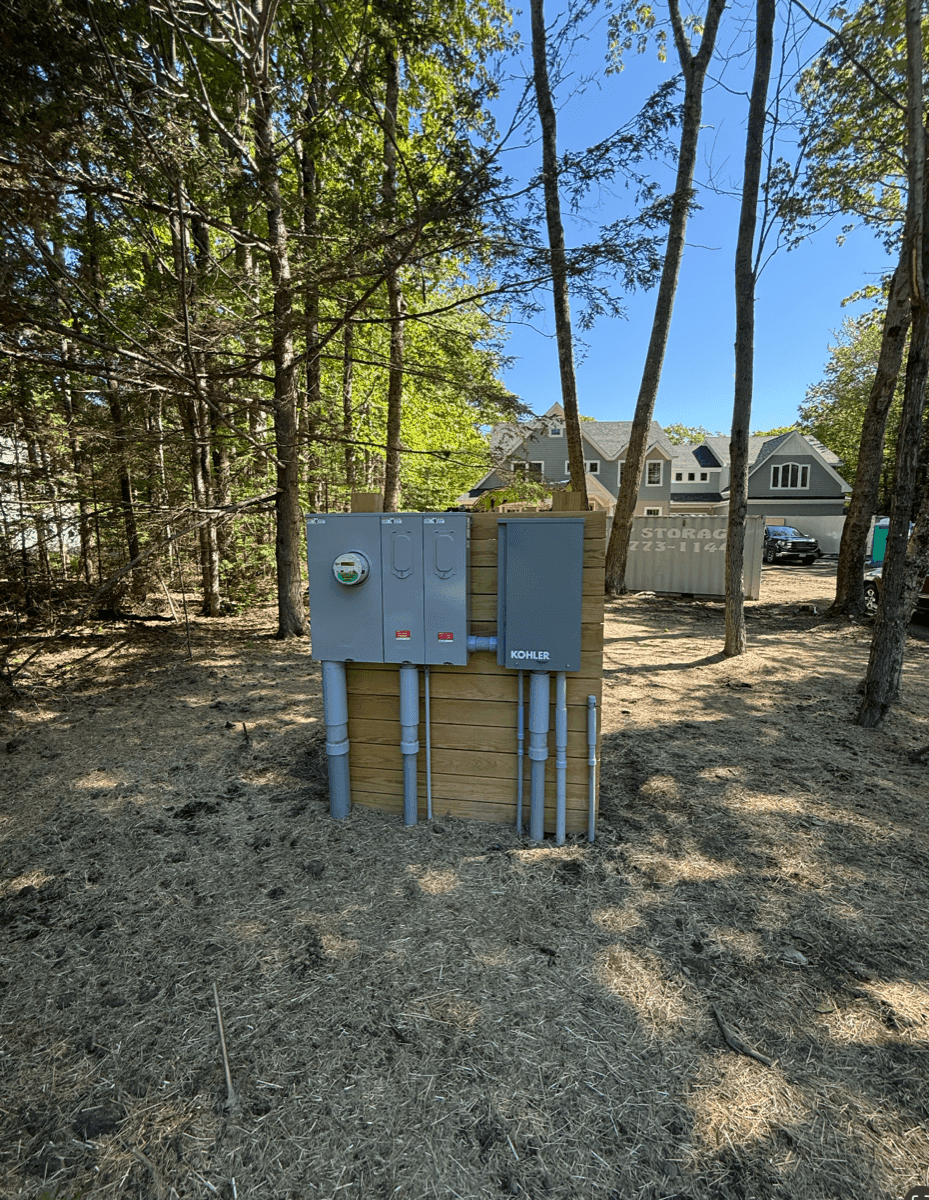
A panel upgrade starts with a load calculation so the new service matches what the house will actually use, usually 200 amps for a full electrification plan. The work can include replacing a fuse box or a Federal Pacific, Zinsco or Challenger panel, adding whole-home surge protection, and bringing grounding and bonding up to current code. Kennebunk Code Enforcement issues the electrical permit through its online portal and inspects the work. The power shutoff is scheduled with Kennebunk Light & Power District, which asks for a temporary disconnect request, allows 48 hours to confirm a date, chooses the approved meter enclosure and does not allow ring-style meter enclosures.
Multi-unit buildings need their own plan. About 12 percent of homes in town are in buildings of two to four units, often a large village house split into apartments. Each unit needs a properly sized panel, the house panel for hallway lights and laundry needs its own circuit plan, and a crowded meter bank may need replacing at the same time. Under current code, a full service replacement on a one- or two-family home also adds an outdoor emergency disconnect near the meter. Goodnow Electric provides a free written estimate, pulls the permit and handles the inspection, so the new service is signed off before the walls and cellar are put back together.