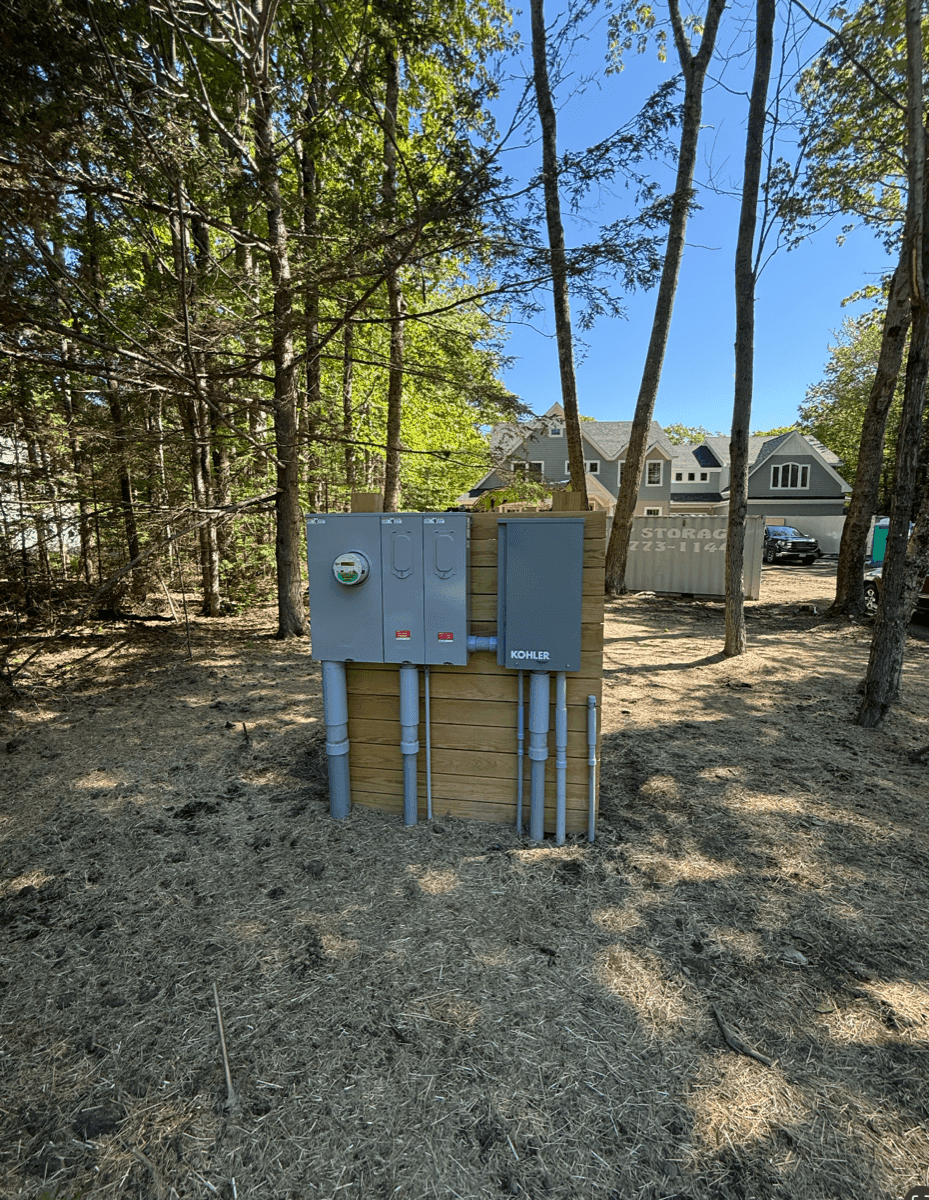
Wells has three kinds of homes that commonly need panel work, and each needs something different. The first is the beach cottage. Many cottages near Wells Beach, Drakes Island and Moody were built for summer use with a small service and a handful of circuits, and when an owner winterizes one with heat pumps or electric heat, the old panel runs out of room. The second is the mobile home, about 14 percent of the town's housing, where an original 100 amp panel, an aging pedestal service or a rusted meter base is often the weak link. The third is the newer house: even homes from the 1990s and 2000s can come up short once oil heat, which still warms about 55 percent of Wells homes, is replaced with heat pumps and an EV charger is added.
A panel upgrade starts with a load calculation and usually ends with a 200 amp service, a new panel with room for future circuits, and whole-home surge protection. Fuse boxes and Federal Pacific, Zinsco and Challenger panels should be replaced outright. In Wells, electrical permitting and inspection fall to the State of Maine: a single-family home is covered by the electrician's single-family dwelling certification, while two-family and larger buildings, and any building with two or more meters, need a state electrical permit. Goodnow Electric handles that paperwork and coordinates the disconnect and reconnect with the utility.
Flood zones matter near the beaches and the Webhannet marsh. Wells Code Enforcement issues flood permits and keeps elevation certificates, and a new service or panel in a flood-prone house should sit above the expected flood level. A full service replacement on a one- or two-family home also now includes an outdoor emergency disconnect within sight of the building, so firefighters can shut the power off from outside. For cottages that stand empty all winter, a new panel is also a good time to label circuits clearly, so a caretaker can shut off everything except heat and the sump pump when the house is closed.