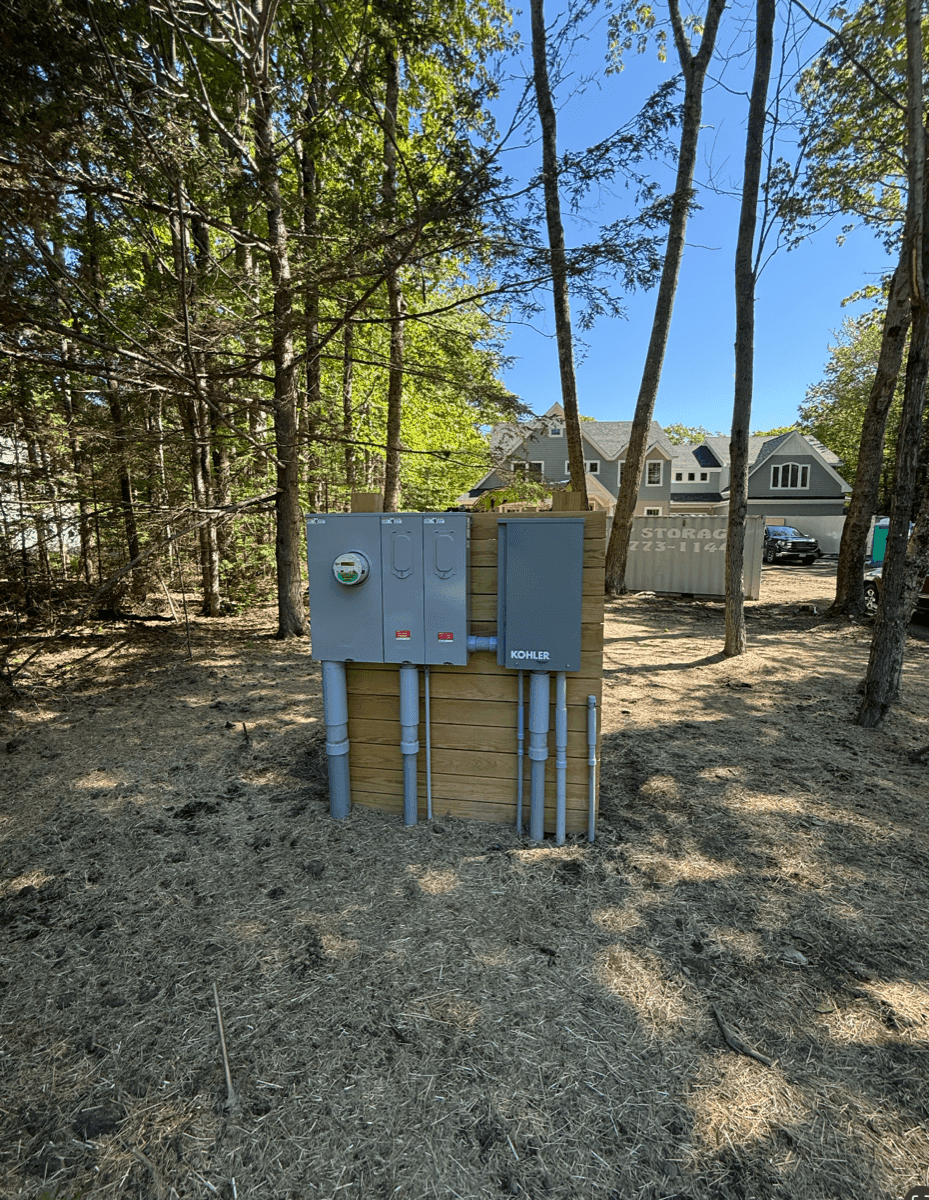
Nearly a quarter of North Berwick's homes were built before 1940, most of them in the village around the old woolen mill and along Elm, High and Wells streets. Houses of that age were wired long before anyone imagined an electric dryer, let alone a heat pump, and many still run on 60- or 100-amp services or on fuse boxes that were extended piece by piece. Signs a panel is at its limit include fuses or breakers that trip on cold mornings, lights that dim when the well pump or a large appliance starts, scorch marks on the panel cover, or a crowd of double-tapped breakers. A Federal Pacific, Zinsco or Challenger panel is worth replacing whatever its age.
The newer half of town brings a different pressure. About 30 percent of homes were built since 2000, and even a modern 100-amp or 150-amp panel fills quickly once oil heat gives way to heat pumps; with about 58 percent of homes still burning oil, that shift is only beginning. A well pump, an EV charger and a generator transfer switch all compete for the same space. Moving to a 200-amp service, with whole-home surge protection to protect heat pump and well controls, keeps those additions from forcing a second upgrade a few years later. It also leaves room for a generator inlet or transfer switch, which many rural owners want after living through a long outage on a well.
North Berwick runs its own electrical permits. The town's application lists service upgrades up to 200 amps and those above it separately, asks for the CMP work number, and calls for rough and final inspections by the town. Maine now also requires an outdoor emergency disconnect on new services and full service replacements for one- and two-family homes, placed on the building or on a pedestal within sight and 50 feet. Goodnow Electric pulls the permit, coordinates the CMP disconnect and reconnect, and meets the inspector. Estimates are free and written, and they spell out the service size, the panel, the surge protection and the permit so nothing is left vague.